
Custom Food Packaging UK for Busy Operators
- June 13, 2026
- News
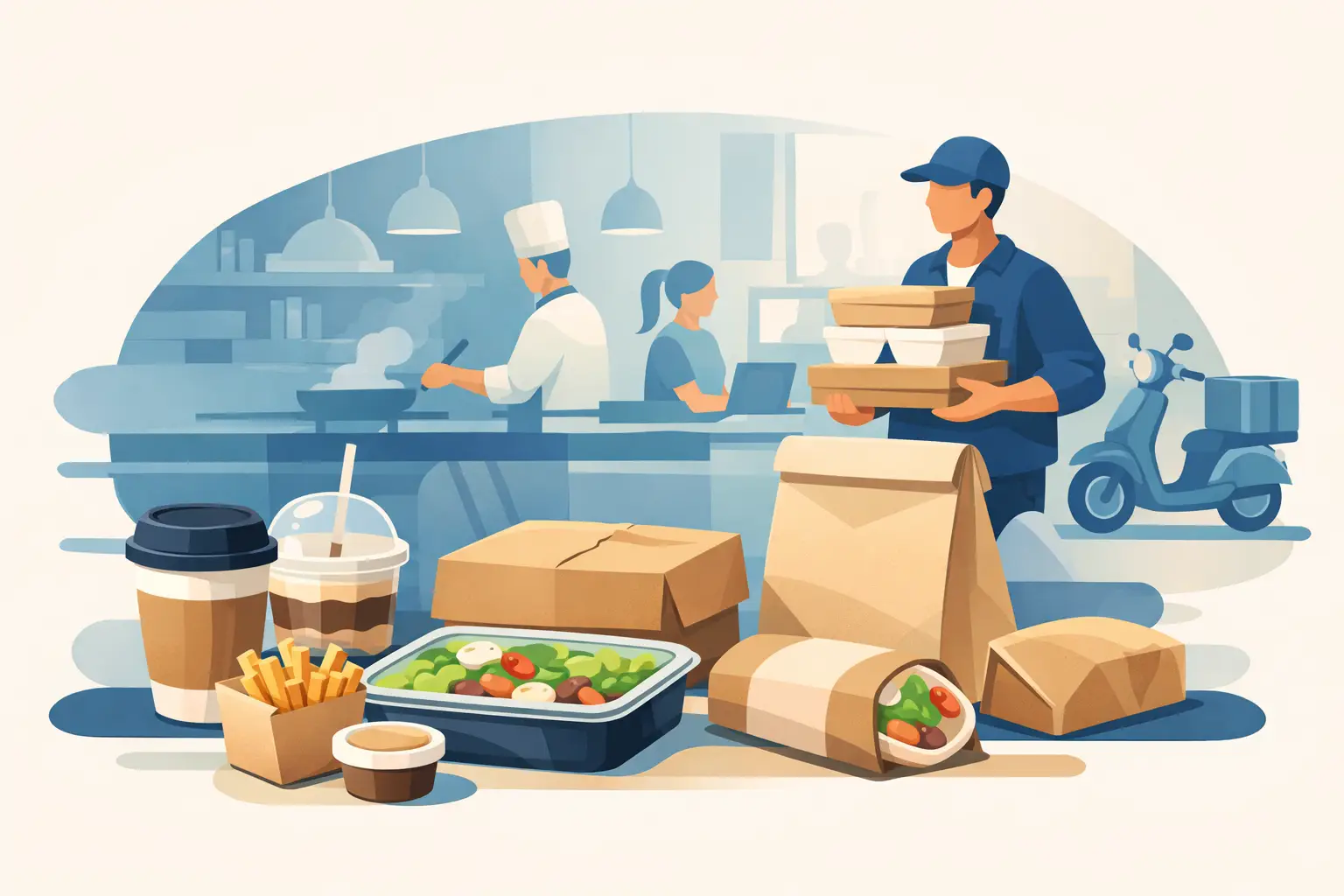
A burger wrapped in plain stock paper does the job. A burger wrapped in branded greaseproof paper does the same job while also carrying your logo, reinforcing your identity and making the product look considered from the first glance. That is why custom food packaging UK buyers often start with presentation, but usually end up making decisions based on speed, consistency and ease of reordering.
For food operators, packaging is not a side issue. It affects service, product handling, brand recall and how customers judge value. If you run a takeaway, café, bakery, sandwich bar or restaurant, the right printed wrap needs to look good, hold up during service and arrive on time without creating extra admin. That sounds basic, but it is usually where suppliers are separated.
What custom food packaging needs to do in practice
Packaging has to work at the counter, on the pass and in transit. If it slows down prep, tears too easily or turns up late, the branding benefit quickly loses its appeal. In foodservice, practical performance comes first.
That is especially true for greaseproof paper and food wraps. They are used constantly, often in fast-paced environments where staff need a straightforward product they can grab, fold and serve without thinking twice. The print needs to be clear, the sheet size needs to suit the menu item and the material needs to cope with grease, heat and movement.
This is why many businesses move away from generic wholesale packaging once they scale beyond a certain point. Plain paper is easy to source, but it does nothing for brand recognition and rarely feels tailored to the way a specific menu is served. A burger outlet may need one sheet size for standard stacks and another for loaded items. A bakery may need lining sheets that present products neatly without overpowering them. A fish-and-chip shop may need wraps that feel traditional but still support a cleaner branded finish.
Why custom food packaging UK suppliers are judged on speed
In hospitality, long lead times create real operational pressure. You may be opening a new site, refreshing branding, launching a menu item or simply running low faster than expected. Waiting several weeks for print approval and production is not always workable.
That is one reason UK manufacturing matters. It generally gives buyers better control over turnaround, communication and repeat ordering. It also reduces some of the uncertainty that comes with overseas sourcing, particularly when consistency matters across multiple runs.
Fast turnaround does not mean cutting corners. It should still include a proper proofing process, clear artwork checks and realistic production windows. For most commercial buyers, the ideal setup is simple – upload artwork, review a mock-up, approve the proof and know exactly when the order is due. If that process is unclear, delays tend to follow.
A dependable supplier should also understand that many food businesses are ordering around service demands, staff rotas and stock space. Practical buying support matters just as much as the printed result.
Choosing the right format for your food packaging
Not every product needs a box or a bag. In many cases, branded greaseproof paper is the most efficient option because it combines protection, presentation and flexibility in one item. It can wrap, line trays, separate products and improve the look of dine-in and takeaway service without adding unnecessary bulk.
For burgers, sandwiches, burritos and toasties, wrapping paper helps keep the product contained while making the handover look sharper. For pizza slices, chips, cakes and baked goods, it can be used as a liner that improves presentation without changing your existing service setup. That flexibility is useful for operators who want better branding but do not want to overhaul their packaging system.
The print style also matters. Some businesses suit a bold repeat logo pattern, while others need a cleaner, lighter design that supports a more premium look. There is no single right approach. A busy street food brand may benefit from energetic, high-contrast artwork. A bakery might prefer something more understated that keeps the product at the centre.
Size matters more than many buyers expect
One of the most common packaging mistakes is choosing a standard sheet size simply because it is available, not because it suits the menu. If the sheet is too small, wrapping becomes awkward and inconsistent. If it is too large, staff waste time folding excess material and usage costs rise.
Bespoke sizing can make a noticeable difference to service flow. A well-sized sheet helps staff wrap products quickly, gives a cleaner finished appearance and reduces waste over time. For businesses serving high volumes, even small gains in efficiency are worth paying attention to.
This is where specialist suppliers tend to offer more value than general packaging sellers. They are usually better placed to recommend standard or custom sizes based on how the packaging will actually be used, rather than simply offering a long catalogue and leaving the decision entirely to the buyer.
Eco credentials need to be genuine and workable
Sustainability is no longer a nice extra. Customers expect it, and many businesses are under pressure to improve their packaging choices without affecting cost control or day-to-day practicality.
That does not mean every eco claim carries the same weight. Buyers should look for materials that are clearly described and suitable for food use, with straightforward information on whether they are biodegradable, compostable or recyclable. Vague language is rarely helpful when you are trying to make purchasing decisions that stand up to customer scrutiny.
The trade-off, in some cases, is that highly specialised sustainable options can limit certain finishes or formats. For most food wraps, though, the priority is straightforward – use responsible materials that still perform properly in a foodservice setting. If a paper looks good on paper but fails during a lunch rush, it is not the right solution.
What to look for in a supplier
When comparing providers, the printed product is only part of the picture. The ordering process often determines whether the relationship will be easy to manage long term.
A good supplier should offer artwork upload, mock-ups, proofing support and sample access where needed. That gives buyers confidence before committing to a full run. It also helps avoid costly mistakes, especially if logo placement, repeat pattern scale or sheet dimensions need adjustment.
Clear delivery expectations matter as well. Buyers do not need vague promises. They need defined production times from proof approval and realistic communication if anything changes. For a busy operator, reliability is often more valuable than a marginal saving on unit price.
It is also worth thinking about repeatability. If your first order is excellent but reordering is slow or inconsistent, the initial experience counts for less. Packaging should become a stable part of your operation, not a recurring procurement problem.
When custom packaging is worth the investment
Some smaller businesses assume branded wraps are only for larger chains or high-volume sites. That is not always the case. If your packaging is visible to customers, appears in delivery photos or plays a role in how food is presented, it is already shaping perceptions of your brand.
The return is not only about appearance. Branded greaseproof paper can make a business look more established, create a more consistent handover experience and support stronger recall when customers post their food on social media or recommend it to others. It turns a necessary cost into something that carries marketing value as well.
That said, the investment makes most sense when the process is straightforward. If ordering custom print feels slow, complicated or inflexible, buyers will often default back to generic stock. That is why specialist support and quick turnaround are such a large part of the value.
For many hospitality businesses, the best custom food packaging UK option is not the most elaborate one. It is the one that fits the menu, reflects the brand, arrives when promised and works every day without fuss. Greaseproof Packaging focuses on exactly that balance – branded food wraps that are practical to order, fast to produce and built for real service environments.
If you are reviewing your packaging, start with the item your customers see and handle most. Often, that single change does more for presentation and consistency than a broader packaging refresh.
Continue reading
- © 2026 Greaseproof Packaging
- Registered: SC759437
- VAT Reg No: 444972955
- © 2026 Greaseproof Packaging
- Registered: SC759437
- VAT Reg No: 444972955