
How Bespoke Food Wrap Sizing Improves Service
- May 30, 2026
- News
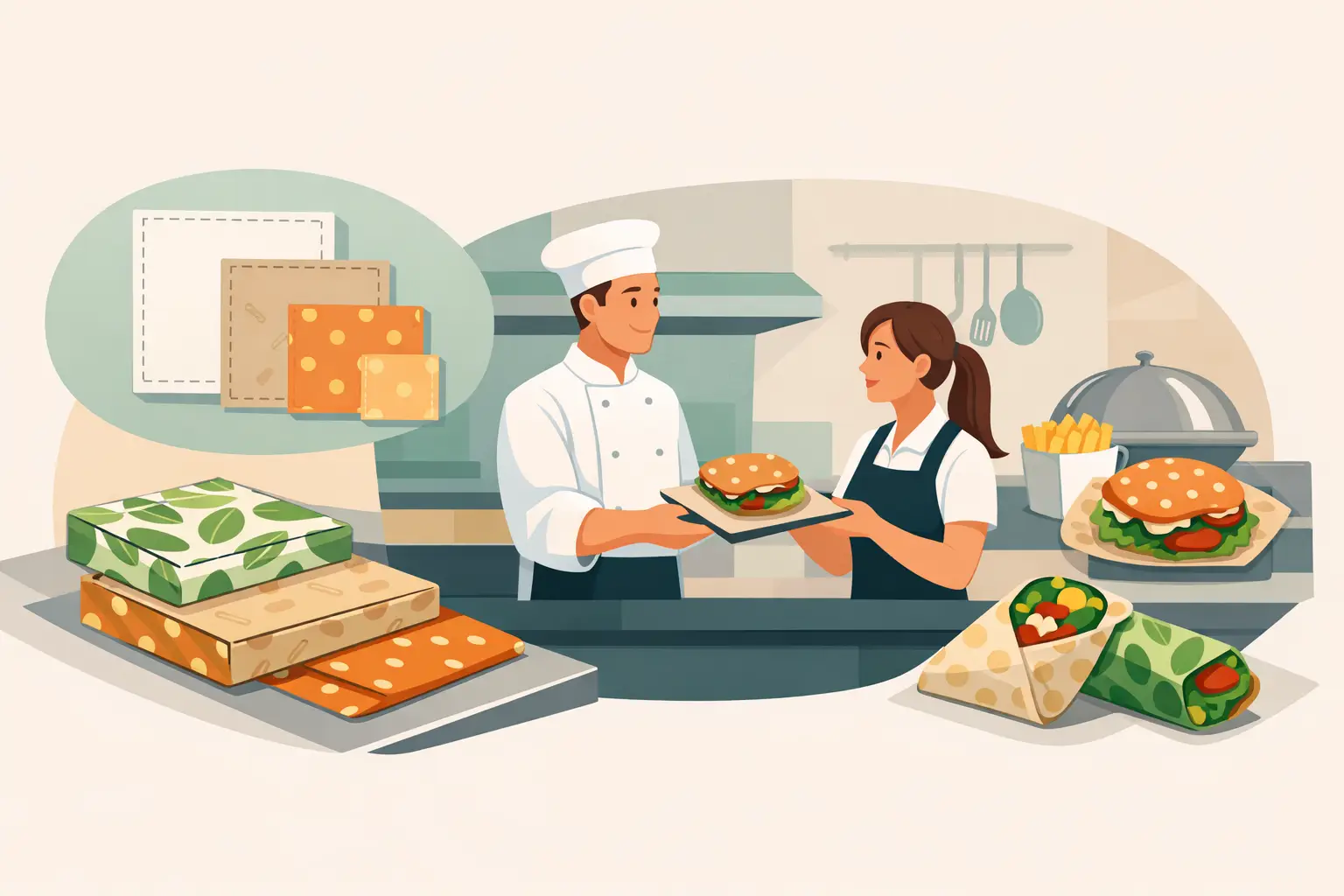
A burger wrapped in paper that is too small looks rushed. One wrapped in paper that is too large slows staff down, adds waste and often leaves the final pack looking loose. That is why bespoke food wrap sizing matters in day-to-day foodservice. The right sheet size does more than carry a logo – it helps teams wrap faster, present food better and keep packaging costs under control.
For busy operators, sizing is not a design extra. It is a practical packaging decision. Whether you serve burgers, toasties, burritos, pizza slices, tray bakes or fish and chips, the sheet size affects how easily food can be handled, how cleanly it can be served and how consistent your brand looks at the counter.
Why bespoke food wrap sizing matters
Standard sizes work for many products, but not for every menu. A sheet that suits a sandwich wedge may be completely wrong for a loaded fries portion or a large bakery item. If the wrap does not match the product, staff have to compensate with folding, double wrapping or awkward handling. That creates inconsistency, especially in peak service.
Bespoke food wrap sizing gives you control over fit. A properly sized sheet supports the way your food is assembled and served. It helps avoid exposed edges, over-folding and excess paper bunching around the product. That is useful not only for appearance, but also for speed and cleanliness.
There is also a cost angle. Oversized sheets can increase paper usage across thousands of orders. Undersized sheets can lead to repeat wrapping or additional packaging being used to make up the difference. Neither is efficient. When sizing is matched to the menu item, packaging becomes more predictable.
The link between sizing, presentation and service
Customers notice packaging more than many operators expect. If branded paper sits neatly around the product, it makes the item feel considered and higher quality. If the wrap is loose, greasy at the edges or poorly folded, it can make the same food look less premium.
This matters for dine-in, takeaway and delivery alike. In a café, tidy wrapping supports counter display and table presentation. In takeaway, it helps staff package orders quickly and consistently. In delivery, it can improve how the food arrives, particularly where wraps also line trays, baskets or boxes.
Good sizing also supports portion control visually. When each item is wrapped in the same way using the same amount of material, your packaging looks standardised. That consistency helps multi-site operators and independent shops alike. It gives customers a more reliable brand experience without adding complexity for the team.
How to assess the right bespoke food wrap sizing
The starting point is the food itself, not the print area. A common mistake is choosing a sheet based only on how much branding you want visible. Branding matters, but the wrap still has to work in service.
Start with the product dimensions in real trading conditions. Measure the item as it is actually sold, including fillings, toppings or sides that affect the final footprint. A burger before garnish may need a different wrap size from the finished burger with sauce and salad. A bakery item may seem simple until you account for how it is picked up and handed over.
Then consider the wrapping method. Some foods are fully wrapped, some are folded once, and some are lined in baskets or trays rather than enclosed. A sandwich wrap used for grab-and-go service may need enough paper for secure folding and branding visibility. A pizza slice sheet may need more surface area for grease resistance and handling than for enclosure.
It is also worth looking at how staff use the sheet during busy periods. Packaging that works on a sample table does not always work on a Friday lunch rush. If the wrap requires too much folding or careful positioning, it may slow service. Practical sizing should support quick, repeatable handling.
Different foods need different sizing logic
Burgers and hot sandwiches usually need a sheet large enough to secure the product while leaving enough structure for easy handling. Too little paper and fillings push out at the edges. Too much and the wrap becomes bulky in the customer’s hand.
For deli sandwiches, paninis and baked goods, the right size often depends on whether the paper is wrapping, lining or both. A folded sandwich may need a neater presentation size, while a warm pastry bag alternative may need extra coverage for grease and heat.
Burritos, wraps and loaded items often benefit most from bespoke sizing because standard sheets can be inefficient. Long products need the right balance of length and width to avoid waste while still allowing a secure fold.
Fish and chip shops, fried food outlets and street food traders often use wraps in multiple ways – wrapping portions, lining trays or separating hot items. In those cases, one standard size may not cover every need. Using two or three well-chosen sizes can be more efficient than trying to force one format across the whole menu.
When standard sizes are enough – and when they are not
Not every business needs a fully bespoke specification. If your core products fit neatly into existing sheet sizes and the wrapping process is straightforward, a standard option may be the fastest and most cost-effective route.
Where bespoke sizing becomes more valuable is when your product format is unusual, your presentation standards are tight or your current packaging creates repeated service issues. If staff regularly trim sheets, double wrap items or complain that the paper does not fit the product, those are clear signs that the size needs reviewing.
Seasonal menus can also affect the decision. Limited-time items, larger loaded products or event catering formats may require different sheet dimensions from your everyday range. In that case, flexibility matters. A supplier that can support both standard and bespoke sizes gives you more control without forcing unnecessary complexity into ordering.
Bespoke food wrap sizing and print performance
Size affects print as much as handling. If your logo or pattern sits on a sheet that is folded awkwardly, key branding can disappear into the crease or end up hidden underneath the product. On the other hand, when the sheet is sized correctly, printed elements can land in more useful visible areas.
That does not mean every wrap needs a large print field. Often the best result comes from balancing product fit with enough clear brand presence to make the paper recognisable in use. For high-volume takeaway businesses, repeatability matters more than trying to place every printed detail in view on every order.
Proofing support is useful here because it helps you see how artwork and sizing work together before production. A mock-up can quickly show whether the selected dimensions make sense for both handling and presentation.
Operational benefits buyers often overlook
Packaging decisions are often made on unit cost alone, but sizing affects wider operations. The right sheet can reduce packing time, lower waste, simplify staff training and improve consistency across shifts. Those gains are harder to see on a price list, but they matter in live service.
Storage is another consideration. If a wrap size is too broad for the way your prep area is organised, it can become awkward to store or dispense. Bespoke does not automatically mean bigger. In many cases, it means more efficient dimensions that suit your counters, service flow and product range.
There is also a sustainability benefit when sizing is more precise. Using only the amount of paper needed supports waste reduction without compromising food handling. For operators under pressure to improve packaging choices, that is a practical improvement rather than a marketing claim.
Getting the ordering process right
The best results usually come from a straightforward conversation around product type, current sheet size, wrapping method and any service issues. Samples are useful because they let you test handling in a real kitchen or counter environment. That is far more reliable than choosing dimensions from a screen alone.
Artwork should come after the size is settled, not before. Once the sheet dimensions are confirmed, print layout becomes easier to approve and more likely to perform well in use. For busy commercial buyers, a clear proofing process and defined lead time matter just as much as the specification itself.
A specialist supplier such as Greaseproof Packaging can usually help narrow down whether you need a standard sheet, a small size adjustment or a fully bespoke format. That guidance is valuable because it keeps the decision tied to service practicality rather than guesswork.
If your wraps are doing their job properly, staff should not have to think about them. The paper should fit the food, support the pace of service and present the brand cleanly every time. That is the real value of getting the size right.
Continue reading
- © 2026 Greaseproof Packaging
- Registered: SC759437
- VAT Reg No: 444972955
- © 2026 Greaseproof Packaging
- Registered: SC759437
- VAT Reg No: 444972955