Greaseproof Paper vs Wax Paper
- May 28, 2026
- News
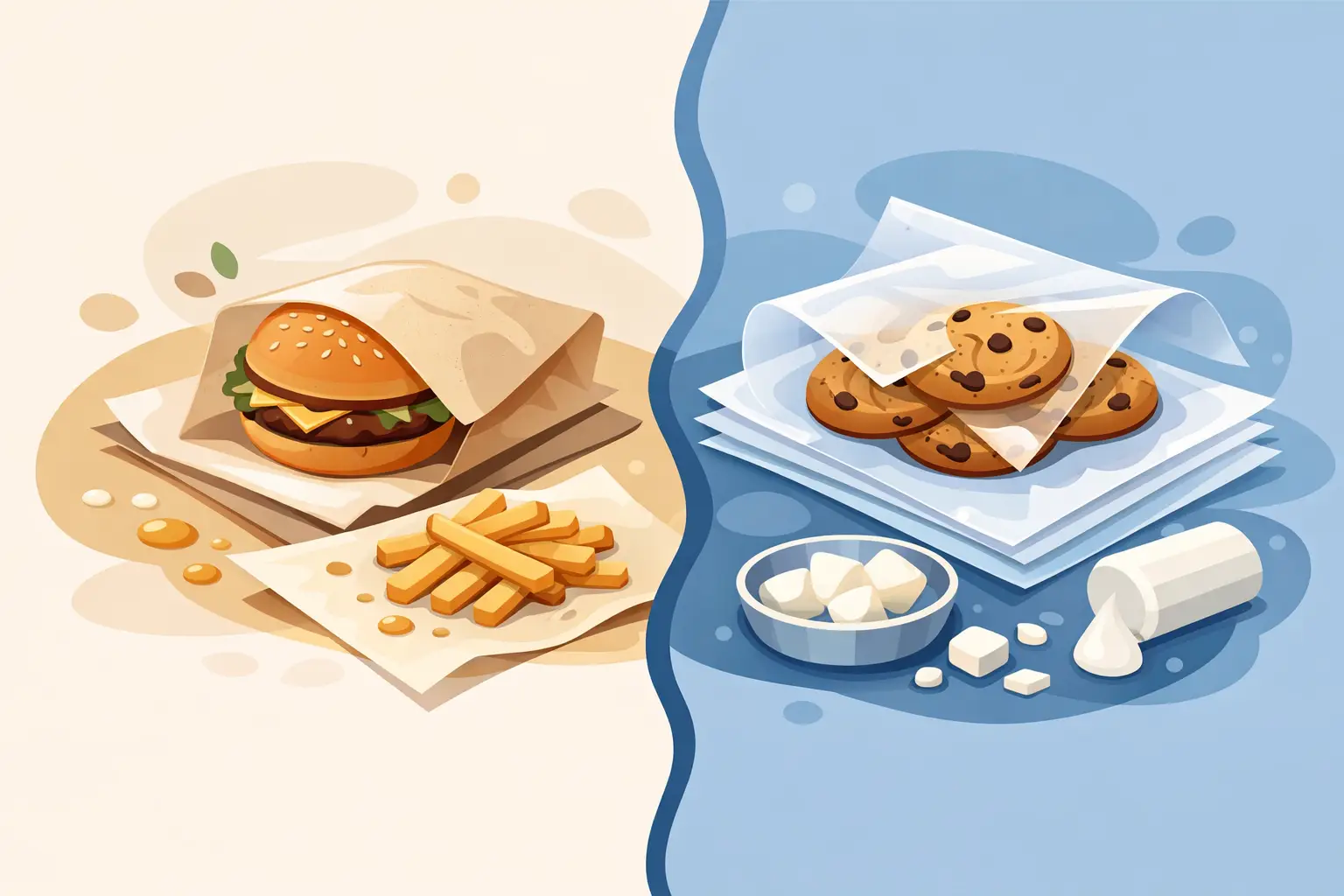
When you are wrapping burgers at pace, lining baskets for table service or packing out bakery items for takeaway, the difference between greaseproof paper vs wax paper is not a minor detail. It affects food presentation, heat performance, print quality, waste handling and, ultimately, whether your packaging works properly during service.
For food businesses, these two materials are not interchangeable. They may look similar at first glance, but they behave very differently once hot food, oils, moisture and branded print are involved. If you are ordering in volume, choosing the wrong paper can create practical problems quickly – from poor grease resistance to disappointing presentation or a finish that does not suit your operation.
Greaseproof paper vs wax paper: the basic difference
Greaseproof paper is made to resist oil and grease through the structure of the paper itself. It is refined during manufacture so the fibres form a dense surface that slows the passage of fats and oils. That makes it a dependable option for wrapping and lining food where grease control matters.
Wax paper is paper coated with a layer of wax, usually on both sides. The coating helps repel moisture and gives the sheet a smooth, slightly tacky feel. It can be useful for certain cold food applications, but its performance depends on that wax layer remaining intact and appropriate for the job.
That distinction matters in commercial foodservice. Greaseproof paper is designed as a food wrapping material in its own right. Wax paper relies on a coating to create a barrier, which changes how it handles heat, print and contact with different foods.
Why food operators usually choose greaseproof paper
In fast-moving kitchens and takeaway environments, packaging needs to do more than cover food. It needs to hold presentation, manage grease and work consistently across service periods. This is where greaseproof paper tends to be the more practical choice.
For burgers, loaded fries, toasted sandwiches, pastries, pizza slices and fish-and-chip servings, greaseproof paper offers a cleaner finish. It helps reduce grease strike-through, so the outside of the wrap or tray liner stays presentable for longer. That matters whether the food is served across a counter, delivered to a table or sent out for takeaway.
It also suits branded presentation far better in most cases. If you are using custom printed sheets, the quality of the print and the overall look of the wrap are part of the customer experience. Greaseproof paper is widely used for this because it supports food-safe print applications while still doing the core job of containing grease.
For businesses that rely on repeatable packaging standards, consistency is the real advantage. A burger wrap should behave the same way on a Tuesday lunch rush as it does on a Saturday evening. The paper should fold neatly, hold up around warm food and reinforce your brand rather than looking flimsy or over-processed.
Where wax paper fits – and where it does not
Wax paper is not pointless. It can suit some low-heat, low-grease uses, especially where moisture resistance is more important than heat tolerance or premium presentation. It may be used for separating bakery items, covering cold foods or wrapping products that are not going to be exposed to high temperatures.
The limitation is that wax is sensitive to heat. Once the sheet is used around hot food, under heat lamps or in warm holding conditions, the coating can soften. That makes it less suitable for many hospitality and takeaway applications. If your menu includes fresh fries, grilled sandwiches, hot bakery products or burgers wrapped straight from the pass, wax paper is often the wrong material.
It is also a less natural fit for many branded food wraps. In commercial terms, if a material creates uncertainty in service, it is rarely the best buying decision. Operators usually need packaging that is simple to specify, easy to reorder and dependable across a wide range of menu items.
Heat resistance and service conditions
This is one of the clearest points of difference in greaseproof paper vs wax paper. Greaseproof paper generally copes better in warm foodservice conditions. It is commonly used as a wrap or liner for hot food because there is no wax coating to melt or transfer.
Wax paper is not generally intended for oven use, and even outside the oven it can become less reliable when in contact with hot food. That does not mean every greaseproof sheet should be treated the same – specifications vary by product – but in general foodservice use, greaseproof paper is the more dependable option where heat is involved.
That practical distinction matters when food is wrapped immediately after preparation. A sandwich toasted to order, a fresh pastry, or a burger assembled and wrapped for collection puts immediate pressure on the packaging. If the material softens, sticks or loses its finish, service quality drops quickly.
Grease resistance and food presentation
For many operators, grease resistance is the deciding factor. A wrapper that shows oil patches too quickly can make otherwise well-prepared food look messy. In dine-in settings, that affects presentation. In takeaway, it affects how the customer receives the order.
Greaseproof paper is designed specifically for this challenge. It helps keep oils from moving straight through the sheet, which is why it is widely used for wraps, tray liners and basket liners. The result is a tidier appearance and a better balance between practicality and brand presentation.
Wax paper can repel moisture, but that is not the same thing as delivering the level of grease management many hot food items require. For a café wrapping cakes or a sandwich bar lining baskets, the difference becomes visible quite quickly once food is in contact with the paper.
Printability and branding
If you are investing in custom food wraps, the material has to support the print result you want. This is another area where greaseproof paper tends to be the stronger option for hospitality businesses.
Branded greaseproof sheets are widely used because they combine food contact suitability with strong visual presentation. Logos, repeat patterns and simple one-colour or two-colour designs can all help turn standard packaging into a recognisable brand asset. For independent food businesses, that is valuable. It helps your food look consistent on the counter, on tables and in customer photos.
Wax-coated surfaces can complicate that process. Depending on the product, print adhesion and finish may be less straightforward than on papers designed specifically for branded food wrapping. For operators ordering custom sizes, requesting mockups and approving artwork before production, reliability matters. Packaging should not become a technical problem that slows procurement.
Sustainability considerations
Sustainability claims need to be looked at carefully because not all papers are equal. In broad terms, greaseproof paper is often better aligned with current foodservice demand for recyclable, compostable or biodegradable packaging options, depending on the specific product and local waste handling rules.
Wax paper can be more complicated. The wax coating may affect how the material is processed after use, especially where food contamination is already part of the disposal challenge. For businesses under pressure to make more responsible packaging choices, material simplicity can be an advantage.
This is one reason many operators now prefer greaseproof solutions from specialist suppliers who can clearly state the product’s properties and intended use. If you are buying in the UK, that clarity matters for both compliance and day-to-day decision-making.
Which should you buy for your business?
If your business serves hot, greasy or branded food-to-go, greaseproof paper is usually the better commercial choice. It is better suited to burger wraps, sandwich wraps, bakery presentation, pizza slice liners, fry liners and general takeaway use. It supports cleaner presentation, more dependable grease resistance and stronger brand execution.
Wax paper may still have a place for some cold or low-heat applications, but it is rarely the first choice for busy hospitality settings where speed, consistency and presentation all matter. In most cases, it is a more limited material.
The best buying decision comes from matching the paper to the service environment, not just the unit price. A cheaper material that underperforms can cost more in customer perception, packaging waste and operational frustration. If you are ordering bespoke printed sheets, it also makes sense to work with a supplier that can support sizing, artwork proofing and fast turnaround, so the paper is right for the food and right for the service model.
For most food operators, greaseproof paper is the safer specification because it is built around the real demands of wrapping, lining and presenting food properly. When packaging has to work every shift, that is usually the standard worth buying to.
Continue reading
- © 2026 Greaseproof Packaging
- Registered: SC759437
- VAT Reg No: 444972955
- © 2026 Greaseproof Packaging
- Registered: SC759437
- VAT Reg No: 444972955