
Are Compostable Wraps Microwave Safe for Food?
- September 3, 2026
- News
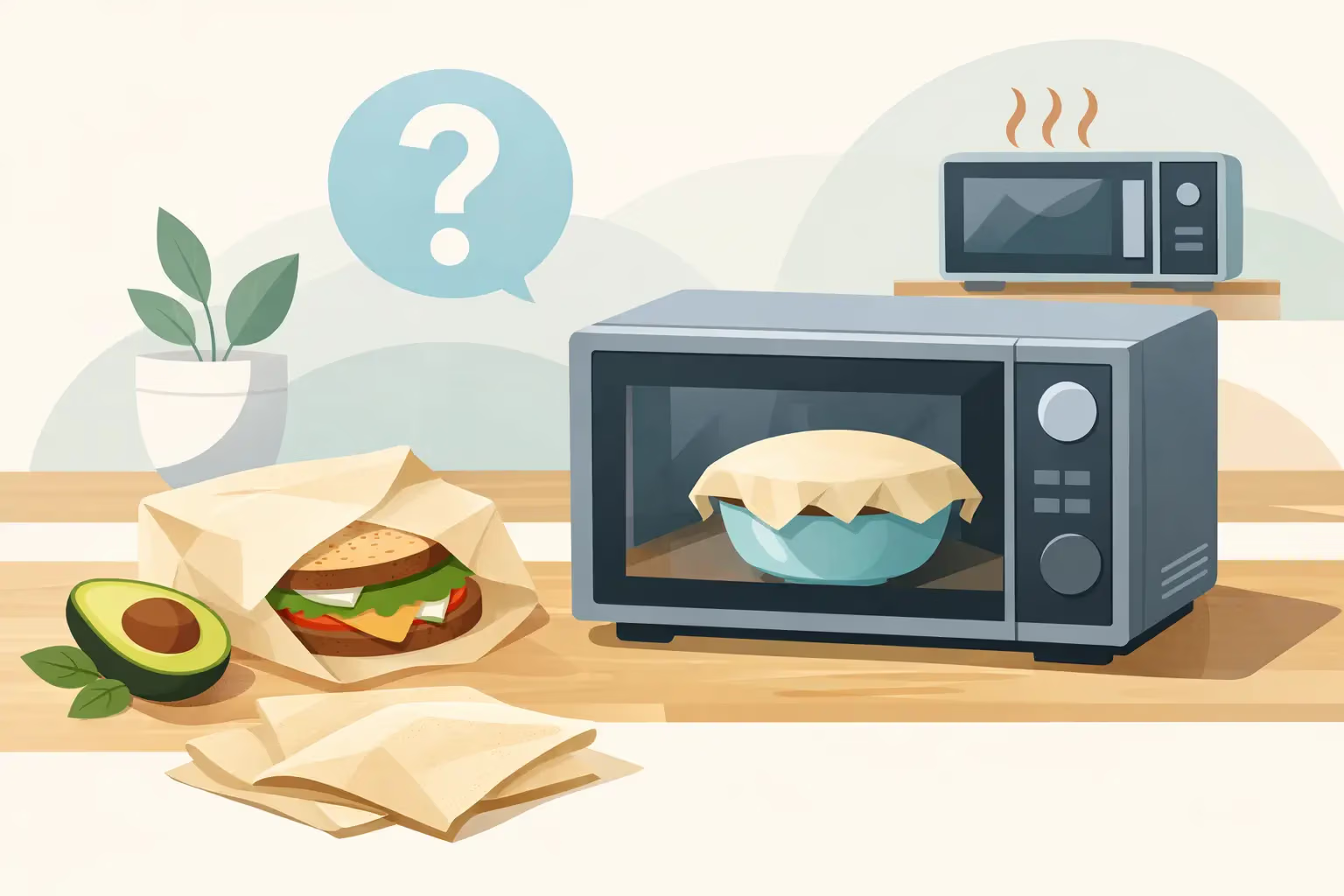
A customer asks for their breakfast burrito to be reheated in its wrap, or a delivery driver needs a sandwich warmed before collection. These are ordinary service moments, but they can create a packaging issue if the material has not been selected for microwave use. Are compostable wraps microwave safe? Sometimes, but compostability on its own is not an answer.
For food businesses, the practical rule is simple: only microwave a wrap when the supplier confirms that the specific product is suitable for microwave use and provides clear conditions for doing so. A compostable claim describes what may happen to a material after disposal in the right waste stream. It does not automatically confirm how it performs under microwave heat.
Are compostable wraps microwave safe in practice?
Microwave safety depends on the complete construction of the wrap, not just its base material. A greaseproof paper may be made from renewable fibres and designed to biodegrade or compost, yet its coating, print, adhesive or added barrier layer may respond differently when exposed to heat, steam and hot fats.
This matters particularly for hospitality operators using printed food wraps. A burger wrap might be perfectly suited to wrapping and serving a hot burger, while not being intended to stay around the product during reheating. Equally, a paper wrap designed and tested for microwave use may be suitable for short reheating periods but not for extended cooking or high-fat foods.
A material can also be food-contact compliant without being microwave safe. Food-contact compliance confirms that the packaging is appropriate for contact with food under stated conditions. Microwave suitability is a separate performance question, covering heat resistance, potential migration, structural strength and the behaviour of inks or coatings during use.
Why compostable does not mean heatproof
Compostable packaging is designed to break down under specific composting conditions. Depending on the material, those conditions may involve controlled heat, moisture and microbial activity. That end-of-life characteristic should not be confused with resistance to the intense, uneven heating created inside a microwave.
Microwaves heat food primarily through its water content. Steam can build up where a wrap touches a hot filling, while oils and fats may become considerably hotter than the surrounding food. A wrapped cheese toastie, bacon roll or loaded burrito therefore places more demand on packaging than a briefly warmed plain sandwich.
The potential problems are operational as well as safety-related. A non-suitable wrap can soften, become greasy, lose strength, stick to food, curl at the edges or transfer print. In a busy kitchen, even a small failure can slow service, affect presentation and create an avoidable customer complaint.
Printed wraps need particular attention. Food-safe printing inks are not automatically suitable for every heating application. The same applies to coatings used to improve grease resistance or moisture control. Always assess the finished printed wrap rather than assuming that a plain version of the paper will perform in the same way.
What to check before reheating food in a wrap
Do not rely on appearance. Paper-based packaging can look similar across products while having very different coatings and intended uses. Request written confirmation from your supplier that covers the exact material, print specification and use conditions.
For a clear procurement check, ask whether the wrap is:
- suitable for microwave reheating, rather than simply safe for food contact
- approved for printed use, including the inks and any varnish or coating applied
- suitable for the expected heating time and power setting
- appropriate for hot, oily or high-moisture foods
- intended to remain in contact with the food during reheating
The answer should be specific. “Suitable for hot food” is useful for service and holding, but it is not the same as “suitable for microwave use”. If a supplier cannot provide a clear use statement, remove the wrap before reheating or transfer the food to a known microwave-safe container.
For bespoke printed packaging, this check should happen before artwork approval. At Greaseproof Packaging, proofing is an opportunity to confirm practical details such as wrap size, print coverage and the way the product will be used in service. It is far easier to select the right specification before production than to adapt reheating procedures after stock arrives.
The food being heated changes the answer
There is no universal reheating time that makes every compostable wrap safe. The food, portion size and microwave setting all matter.
A lightly filled sandwich reheated for a short period will behave differently from a large burrito with cheese, sauce and meat. The latter traps more steam and contains ingredients that can create localised high temperatures. Fries and fried chicken can release hot oil, while pizza toppings can heat unevenly and make the wrap damp or fragile.
If wrapped products are routinely reheated, test the real serving format. Use the intended portion, typical filling quantity and normal microwave programme. Check the wrap immediately after heating for discolouration, tearing, sticking, excess grease penetration and changes to the print. Then repeat the test at the upper end of the likely service time, rather than only under ideal conditions.
This is not a substitute for supplier confirmation, but it helps establish a workable kitchen procedure. A wrap may be suitable for a 30-second reheat but not a two-minute heating cycle. It may also perform well with a dry bakery item but not with a sauce-heavy meal.
Materials and features that need extra caution
Some packaging elements should never be treated as microwave-safe unless they are expressly approved. Metallic foils, metallic effects and metal staples are obvious concerns, as they may spark or arc. Do not microwave any wrap with a foil layer, metallic decoration, wire tie or metal clip.
Clear windows, labels, stickers and tape can also change the answer. A wrap may be microwave suitable on its own, but an applied label or sealing sticker may not be. Remove non-approved additions before heating.
Compostable films and bio-based coatings also need product-specific guidance. Terms such as plant-based, PLA-lined or biodegradable describe material origin or disposal characteristics, not a blanket temperature rating. Some films can distort or soften under microwave conditions. Others are designed for use at higher temperatures. The specification, not the marketing term, is what counts.
Build a simple reheating procedure for staff
The best packaging specification still needs a clear instruction at the point of use. Where food is reheated regularly, include the method in staff training and keep it consistent across shifts.
If the wrap is approved for microwave use, set a defined maximum time and power level. Make sure staff know whether the food should be heated loosely wrapped, partially opened or fully removed from the wrap. If the product needs venting, state this clearly. Trapped steam is a common cause of soggy packaging and hot spills.
Where the wrap is not approved, make removal the default. Staff should transfer the item to an appropriate plate, tray or microwave-safe container before reheating. That instruction is especially useful for delivery orders, where customers may otherwise assume any paper wrap can go straight into the microwave.
A short printed message on menus, order tickets or packaging labels can prevent confusion. Use direct wording, such as “Remove wrap before reheating” where applicable. Avoid vague instructions that leave customers to make their own judgement.
Choosing wraps for foodservice operations
The right choice starts with the role the wrap plays in your operation. If it is used only for presentation and hand-held eating, focus on grease resistance, strength, print quality and responsible disposal options. If it also needs to stay on food during reheating, microwave performance must be included in the specification from the start.
That may affect the paper grade, coating, ink system and print coverage you choose. There can be trade-offs. A highly grease-resistant finish may be excellent for a loaded burger, but you should still confirm its suitability for your precise heating conditions. A simpler uncoated sheet may be more suitable for short reheating, yet offer less protection against oily fillings.
Ordering samples before committing to a larger branded run is sensible when microwave reheating is part of service. Test samples with actual menu items, not just with dry paper or a generic kitchen test. This gives managers confidence that the packaging works at the pass, on collection orders and after a realistic microwave reheat.
For a busy kitchen, the safest choice is rarely the material with the broadest eco claim. It is the wrap with a clear specification, proven suitability for the menu and instructions your team can follow without slowing down service.
Continue reading
- © 2026 Greaseproof Packaging
- Registered: SC759437
- VAT Reg No: 444972955
- © 2026 Greaseproof Packaging
- Registered: SC759437
- VAT Reg No: 444972955