What Paper Suits Hot Food? A Trade Guide
- September 9, 2026
- News
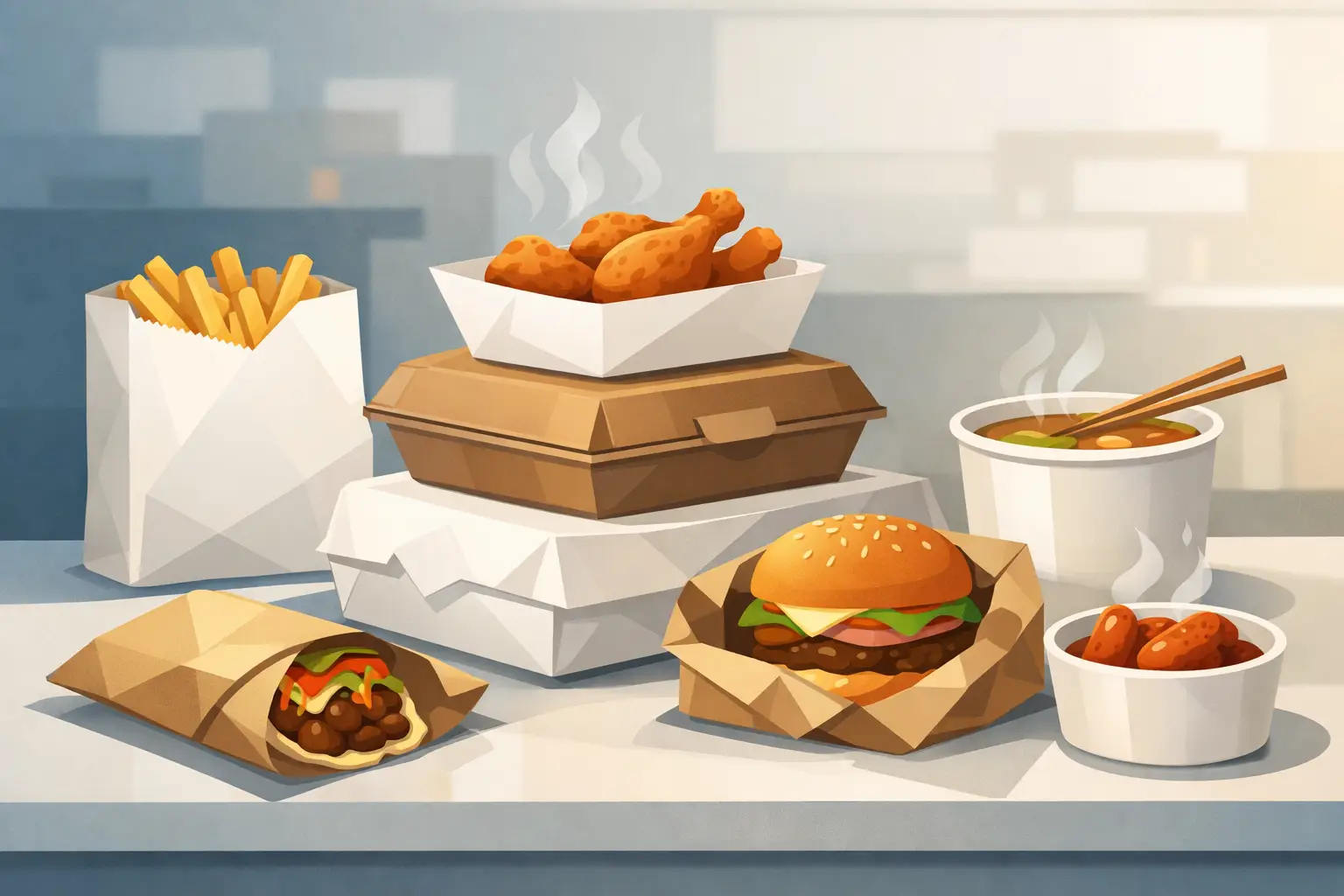
A burger can leave the pass looking excellent and arrive wrapped in a soft, greasy sheet ten minutes later. That is why the question, what paper suits hot food, is not just about choosing a material that looks right. For cafés, takeaways and restaurants, the paper must handle heat, oil and steam while keeping the food easy to hold and the brand presentation intact.
The right choice depends on the food being served, how long it will sit in its packaging, and whether the paper is used to wrap, line or separate items. Greaseproof paper is often the practical starting point, but not every hot dish creates the same demands.
What paper suits hot food in foodservice?
For most hot, freshly prepared foods, food-grade greaseproof paper is the most versatile option. It is designed to resist oil and grease, making it suitable for burgers, toasted sandwiches, pastries, chips, fried chicken, wraps and many bakery items. It helps prevent oils travelling through the sheet and keeps hands, trays and outer packaging cleaner.
This matters at service. A paper wrap that fails quickly creates a poor customer experience, adds mess at the counter and can make even carefully prepared food look less appealing. A reliable greaseproof sheet supports quicker handling, particularly during busy takeaway periods.
However, grease resistance is only one part of the decision. Hot food also releases steam, and steam changes how paper performs. If a tightly wrapped item is held for too long, moisture can soften the paper and affect crisp food. The paper may be suitable, but the wrapping method and holding time still need consideration.
Greaseproof paper for oily and fried foods
Greaseproof paper is particularly well suited to foods with surface oil or butter. Think smash burgers, bacon rolls, croissants, fried chicken, fish, onion rings and loaded fries. It provides a useful barrier between the food and the customer, without the heavy feel of some coated packaging.
For basket service and trays, a greaseproof liner catches excess oil and reduces cleaning between covers. For takeaway, it can be used as an inner wrap before an item goes into a bag or box. This gives the food a clean, finished appearance while adding brand visibility at the point customers open their order.
The required paper weight depends on the job. A lightly buttered toastie needs less protection than a double burger with sauce and fries. If the food is especially greasy, has a long delivery journey or will be handled repeatedly, choose a paper specification intended for more demanding food contact use and test it with your actual menu item.
Paper for hot sandwiches, burgers and wraps
Burgers, sandwiches and burritos need a sheet that folds cleanly, stays manageable when warm and does not tear as the customer eats. Greaseproof sheets work well because they are flexible enough to wrap around the product while resisting oil from fillings, cheese and sauces.
Size is as important as material. A sheet that is too small leaves gaps and makes a secure wrap difficult. One that is too large adds unnecessary folding, slows staff down and can make the product look untidy. A compact burger may suit a square sheet, while a long sandwich, panini or burrito benefits from a rectangular format that allows a consistent fold.
For operators using custom printed paper, allow space around the edges for folds. Branding placed only in the centre may disappear once the item is wrapped. A repeating pattern or logo placement designed around the finished fold gives a more consistent result across service.
Heat is not the same as oven-safe
A common mistake is to treat all food paper as suitable for every high-temperature application. Paper that works well for wrapping a freshly cooked burger is not automatically suitable for baking, oven use, grilling or direct contact with heating elements.
Greaseproof paper is generally used for serving, wrapping and lining hot food after cooking. Where paper is required inside an oven or baking tray, use a product specifically made and approved for baking temperatures. For pizza, the distinction is useful: a greaseproof sheet can be an effective box liner or serving separator, but it should not be assumed to be suitable beneath a pizza during high-heat cooking unless the specification says so.
The same principle applies to microwaves. Some papers may be appropriate for brief reheating, while inks, coatings and food contents can change the result. Check the supplier specification rather than relying on appearance alone.
Managing steam and keeping food crisp
The biggest packaging challenge with hot food is often condensation, not grease. Hot chips, fried chicken, pizza and toasted products release steam after cooking. If that steam is trapped inside a close wrap or sealed container, it turns into moisture. Crisp coatings soften, paper becomes damp and the product can lose quality before it reaches the customer.
Paper can help, but it cannot solve poor ventilation on its own. For foods that need to remain crisp, use greaseproof paper as a liner or loose wrap rather than sealing the food tightly. Pair it with suitable outer packaging that allows steam to escape where needed. This is especially relevant for delivery orders, where food may be enclosed for longer than it would be for counter collection.
For saucier or softer foods, a more enclosed wrap can be useful because it improves containment and makes the item easier to eat on the move. A breakfast wrap and a portion of chips may both be hot, but they need very different packaging behaviour. One needs structure and containment; the other needs room to breathe.
Choosing paper by menu item
A practical purchasing decision starts with the food, not the print design. Burgers, deli sandwiches, paninis and burritos usually need a flexible greaseproof wrap that contains oil and holds its fold. Cakes, cinnamon rolls and warm pastries need a clean presentation sheet that prevents butter or icing from marking the bag or box.
Fish and chips often benefit from greaseproof paper as an inner layer, helping manage oil while supporting traditional presentation. Pizza outlets can use sheets to line boxes, separate slices or wrap individual servings. For fries and fried sides, a liner is useful inside a tray, basket or carton, provided the overall pack does not trap excessive steam.
When a menu includes several formats, it is often more efficient to standardise around two or three sheet sizes rather than purchasing a different size for every item. For example, one smaller sheet for pastries and sides, one square sheet for burgers and one larger rectangular sheet for sandwiches or wraps can cover a wide range of service needs. The best setup is the one staff can use quickly and consistently.
Printed paper must still work as packaging
Custom print turns a functional wrap into a recognisable part of the customer experience. It can make a takeaway burger, bakery bag or café tray look considered without changing the food itself. But the paper should be selected for performance first, then printed to suit the application.
Ask for a mock-up and check how the artwork will repeat across the chosen sheet size. This is particularly useful when a logo has fine detail, pale colours or text that must remain legible. It is also worth requesting samples before committing to a larger run, especially if you are introducing a new menu item or changing from plain paper to branded wraps.
For busy operators, proof approval is a useful control point. It confirms the artwork, dimensions and print layout before production begins, reducing the risk of receiving paper that looks correct on screen but does not work well at the counter.
Food safety and sustainability checks
Paper used in direct contact with food should be supplied for that purpose. Do not substitute decorative craft paper, general wrapping paper or unverified printed sheets simply because they look similar. Food contact suitability, grease resistance and intended temperature use should be clear before ordering.
Environmental claims also deserve a practical check. Biodegradable, compostable and recyclable materials can support a more responsible packaging approach, but disposal options vary by local authority and by the condition of the paper after use. A heavily food-soiled sheet may not be accepted in recycling collections, even where the base material is recyclable.
For most hospitality businesses, the sensible approach is to choose paper that meets the operational need first, then communicate its disposal guidance accurately. Avoid claims that customers cannot realistically act on in their area.
Make the choice around the journey, not just the food
The best paper is the one that performs from kitchen to customer. Test it at the temperature you serve, with the portion size you sell, after the realistic wait time for collection or delivery. Check whether oil has travelled through, whether the folds hold, whether the print still looks sharp and whether crisp food has become damp.
If the result is clean, easy to handle and consistent for staff, you have the right starting point. A properly specified greaseproof sheet, matched to your food and service style, can protect the product while making every order look like it came from your business.
Continue reading
- © 2026 Greaseproof Packaging
- Registered: SC759437
- VAT Reg No: 444972955
- © 2026 Greaseproof Packaging
- Registered: SC759437
- VAT Reg No: 444972955