Best Wraps for Loaded Fries: A Practical Guide
- September 11, 2026
- News
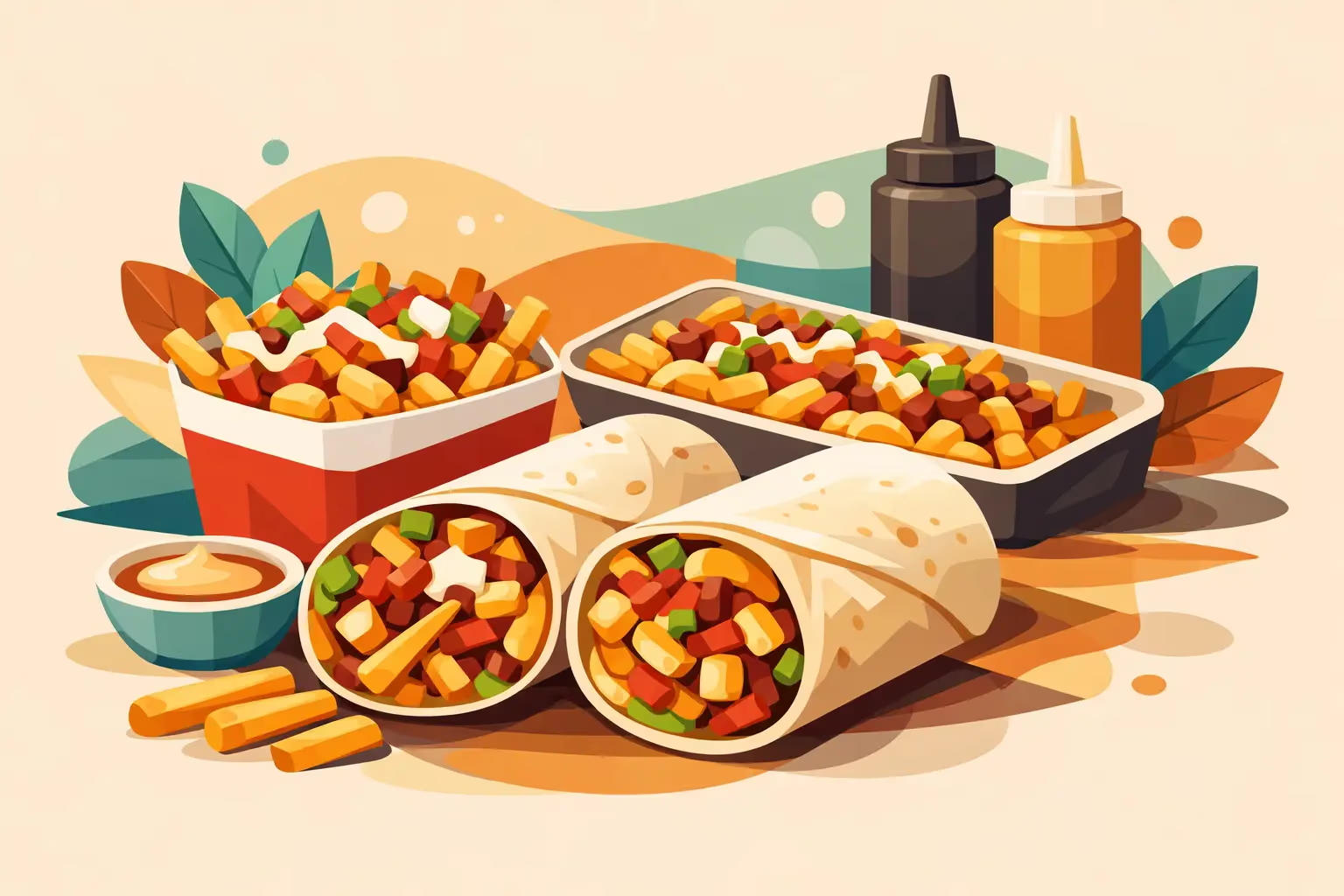
Loaded fries create a packaging problem that plain chip paper rarely solves. Hot chips, melted cheese, gravy, pulled meat and sauces can quickly soak through an unsuitable liner, leaving customers with a messy tray and staff with extra clearing-up. The best wraps for loaded fries need to manage grease and moisture while keeping the food presentable from the pass to the table, kerbside collection or delivery bag.
For most operators, the answer is not a tightly wrapped portion. It is a well-sized greaseproof sheet used to line a tray, basket, scoop or box. This gives the fries a clean branded base, protects the serving container and keeps portions moving quickly during busy service.
What makes the best wraps for loaded fries?
The right food wrap does three jobs at once. First, it needs to provide a barrier between the fries and the container. Second, it should support presentation, particularly where toppings are part of the product’s appeal. Third, it must be easy for the team to grab, line and serve without slowing the line down.
Grease resistance is the starting point. Chips release oil, while cheese sauces, chilli, curry sauce and gravy add moisture. A thin, uncoated sheet can become saturated quickly, especially when a portion sits for several minutes before being collected. Greaseproof paper is designed for this type of contact, helping to contain oils and reduce transfer to hands, trays and outer packaging.
That does not mean any greaseproof sheet will perform identically. A lighter loaded fries portion with grated cheese and seasoning places different demands on the paper than a fully dressed serving with slow-cooked meat, multiple sauces and pickled toppings. The wetter and heavier the menu item, the more important it is to test the paper with the finished product rather than judging it from a dry sample.
Use a liner, not a parcel
A common mistake is treating loaded fries like a burger or burrito. Fries need space for toppings and should remain accessible with a fork. Folding paper tightly around them traps steam, softens the chips and can dislodge ingredients when the customer opens the portion.
Instead, place a flat greaseproof sheet inside the serving format. It can sit in a wire basket, food tray, chip scoop, takeaway box or on a plate for dine-in service. Leave enough paper visible around the edge to frame the food, but avoid an oversized sheet that bunches up and makes the portion look untidy.
For takeaway, the liner should work with the outer container rather than replace it. A paper-lined box or tray remains easier to carry and gives toppings more protection during transport. Where delivery times are longer, ventilation in the outer pack and sensible topping choices matter as much as the wrap. No paper can keep fries fully crisp if hot steam has nowhere to escape.
Choose the sheet size around the serving vessel
Sheet size is one of the most practical purchasing decisions. It affects speed, waste and how consistent each portion looks. Measure the inside of the basket, tray or box, then allow enough extra paper to rise slightly up the sides.
A smaller sheet can suit chip scoops and narrow trays, while a medium square format is often more flexible for baskets, rectangular trays and casual dining plates. Larger sheets are useful for generous sharing portions, but they should still be proportionate to the serving vessel. Excess paper is not a sign of premium presentation if it folds into the food and collects sauce.
If loaded fries are one part of a wider menu, choosing a versatile sheet size can simplify stockholding. The same greaseproof paper may also line burger baskets, hold a sandwich, wrap a baked item or separate slices in a takeaway order. However, one size does not always suit every product. Operators serving both small loaded fries sides and substantial sharing trays may find two sheet sizes reduce waste and improve presentation.
Before committing to a full run, request samples and test them at service temperature. Ask staff to line the vessel, add the usual fries and toppings, then check the result after the typical wait for collection or delivery dispatch. This reveals whether the size, paper feel and grease resistance are right for the operation.
Printed wraps turn a side dish into a branded product
Loaded fries are highly visual, and the paper beneath them is usually visible in customer photographs. Branded greaseproof sheets can make a standard tray or basket look more deliberate, reinforcing the business name without changing the food itself.
The best print approach is usually clear and repeatable rather than overly detailed. A logo, simple pattern, short brand message or recognisable icon can remain visible around the edges of the portion. Fine type and intricate artwork may be lost beneath toppings, grease marks or folds, so artwork should be designed for the way the sheet will actually be used.
Consider contrast too. Dark food and rich sauces can obscure darker printing, while a design with sufficient space around key elements stays readable. A proof is useful here: it gives the team a chance to check logo scale, colour placement and repeat pattern before production begins. For businesses with a fixed opening date, promotion or menu launch, proof approval should be built into the ordering timetable rather than left until the last minute.
Balance presentation with service speed
Packaging only earns its place on the pass if it is easy to use under pressure. Pre-cut sheets are generally quicker than paper taken from a roll because staff can pick up one sheet, line the container and move on. They also produce a more consistent result across shifts.
Store sheets close to the assembly area in a clean, dry dispenser or lidded container. If paper is left near steam, spills or greasy surfaces, it becomes harder to separate and less pleasant to handle. Training should be simple: one sheet per portion, placed flat before the fries are added. Complicated folding methods are rarely realistic during a Friday evening rush.
It is also worth checking how the liner behaves when sauces are added. Some kitchens build loaded fries directly in the lined tray, while others add chips first and finish with toppings at the pass. The best workflow depends on the menu and equipment, but the paper should support it without sticking to the food or collapsing into the portion.
Consider sustainability alongside performance
Customers increasingly notice unnecessary packaging, but food businesses still need a liner that performs. Greaseproof paper can be a practical alternative to plastic-based liners where the material specification and local waste arrangements support it. Many foodservice papers are available with biodegradable, compostable and recyclable credentials, but these terms are not interchangeable.
Check the specific product information before making a disposal claim on menus, bins or customer signage. The presence of food waste, sauce and grease can also affect what a local collection service accepts. A material may be suitable in principle, yet not be collected through the waste route available to your premises.
The most responsible option is often a sheet that is appropriately sized, fit for purpose and ordered in a format the team will use consistently. Over-specifying the paper or using a much larger sheet than necessary creates avoidable material use. A reliable, correctly sized greaseproof liner protects the serving vessel and can reduce the need for double-lining or extra napkins.
Order around the reality of your menu
Custom printed food wraps should be planned as an operational item, not an afterthought. Confirm the sheet size, artwork, quantity and intended use before ordering. If the design is new, a mock-up and proof approval process helps prevent costly surprises once production starts.
For UK operators working to an opening, event or campaign deadline, allow time for artwork checks and production. Greaseproof Packaging offers free mock-ups, proofing support, sample requests and a defined 5-7 working day delivery window from proof approval, giving busy teams a clearer route from design to usable stock.
A properly chosen liner will not rescue cold fries or an overloaded delivery box. It will, however, keep a well-made portion cleaner, easier to serve and more recognisably yours – exactly where a fast-moving loaded fries menu needs support.
Continue reading
- © 2026 Greaseproof Packaging
- Registered: SC759437
- VAT Reg No: 444972955
- © 2026 Greaseproof Packaging
- Registered: SC759437
- VAT Reg No: 444972955