Top Eco Food Wraps for Busy Food Businesses
- September 13, 2026
- News
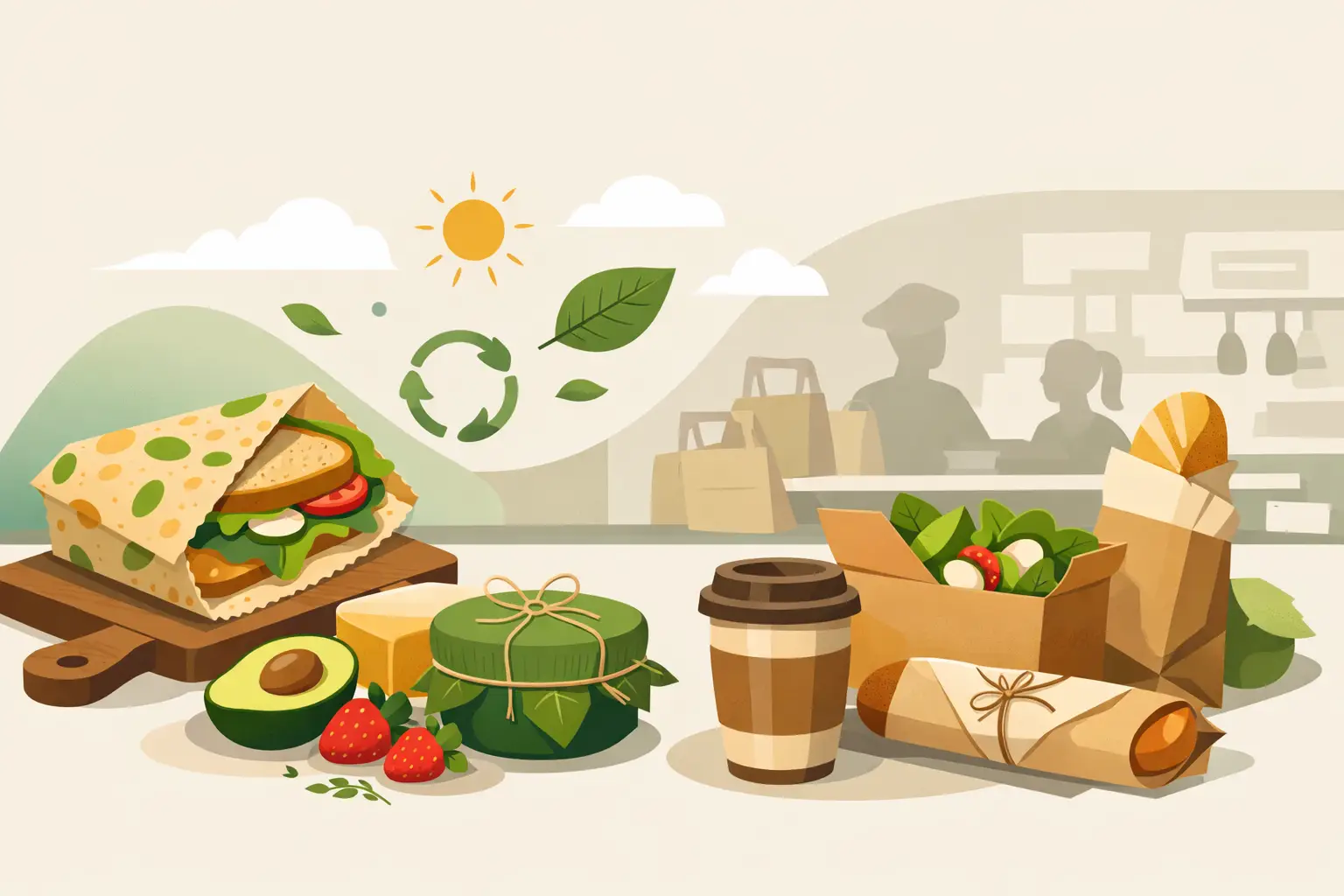
A burger wrapped in flimsy paper arrives looking tired. A sandwich wrap that tears during service slows the queue. And a plain sheet gives away a valuable branding opportunity every time an order leaves the counter. The top eco food wraps for food businesses need to do more than carry a sustainability message: they must manage heat, grease and handling while presenting your food properly.
For cafés, takeaways, bakeries and caterers, the right choice is rarely about finding one material labelled “green”. It is about matching the wrap to the menu, service style, portion size and disposal route, then making sure it can be supplied and printed reliably.
What makes a food wrap genuinely practical and eco-conscious?
Eco credentials matter, but performance comes first. If a wrap leaks through, needs to be doubled up or causes food to lose its shape in transit, it creates waste as well as a poor customer experience. A fit-for-purpose food wrap should provide a sensible balance of grease resistance, strength, food-safe suitability and end-of-life potential.
The most useful materials are commonly paper-based wraps made with responsible material choices and suitable food-contact properties. Depending on the specification, they may be biodegradable, compostable or recyclable. Those terms are not interchangeable, and operators should avoid treating them as such in customer-facing claims.
Compostability depends on the material and on access to an appropriate composting facility. Recyclability can be affected by food contamination, local collection rules and any coatings used. Biodegradability describes how a material breaks down under particular conditions, rather than guaranteeing that it belongs in every waste stream. Clear supplier information and accurate on-pack messaging protect both your business and your customers.
For many operators, unbleached or white greaseproof paper is a strong starting point. It offers a clean surface for presentation and printing, handles everyday foodservice use effectively and avoids the unnecessary bulk of heavier packaging. The best option still depends on what you serve.
Top eco food wraps by menu type
Burger, fried chicken and loaded food wraps
Burgers, fried chicken and loaded fries place the greatest demands on a wrap. The paper needs enough grease resistance to prevent visible soak-through, while remaining easy for customers to open and hold. A sheet that is too small leaves the base exposed; one that is excessively large adds material cost and can make a compact product look untidy.
For these items, select a greaseproof sheet sized around the finished product rather than the bare bun or box. Test it with your fullest build, including sauces, cheese and sides. A branded wrap can also act as a basket liner or tray liner, giving you consistency between dine-in and takeaway service without introducing another packaging format.
Sandwiches, paninis and deli counter items
Sandwich bars need wraps that fold quickly and stay neat during a busy lunch period. Greaseproof paper works well for toasties, paninis, bagels and filled rolls where a crisp, informal presentation suits the brand. It can be used as an outer wrap or a protective inner layer inside a paper bag.
The key trade-off is between a close fold and sufficient coverage. A generously filled sandwich needs room for a secure fold, but too much excess paper can reduce speed at the counter. A sample run is useful here because staff can test real folding methods before committing to a sheet size.
Pizza slices, bakery items and cakes
Pizza slices need a wrap or liner that handles oil without sticking to the base. Bakery items present a different problem: buttercream, icing and delicate pastry may need protection from smudging as much as grease management. A lighter sheet can be ideal for cookies, brownies and pastries, while more substantial products may need a carefully selected size that supports the item without over-wrapping it.
Printed greaseproof paper is particularly effective where the product is photographed or handed over individually. A repeated logo, pattern or short brand message turns a simple slice, bake or cake serving into a recognisable presentation point.
Fish and chips, burritos and high-moisture foods
Hot, high-moisture foods require realistic testing. Steam can soften any paper over time, especially on longer delivery journeys. A wrap that performs well for a dry sandwich may not suit a saucy burrito or freshly fried fish.
Use the wrap as part of the full pack format, not in isolation. Test it with the outer bag, box or tray you actually use, then assess the result after the typical wait before collection or delivery. This is where foodservice experience matters more than generic material descriptions.
Size and format affect cost as much as appearance
Choosing from standard sheet sizes is often the fastest route to ordering, but bespoke dimensions can reduce waste and improve speed if your menu has a consistent product format. A burger operator with one signature build may benefit from a sheet designed for that product. A café with varied sandwiches and cakes may prefer two versatile sizes rather than a different wrap for every item.
Before ordering, measure the food as served and allow for folds, overlap and the way staff handle it. Consider whether the sheet will be used flat as a liner, folded around a product, or both. This simple step prevents a common procurement mistake: buying paper based on a nominal product size rather than real service requirements.
Paper weight and finish also matter. Heavier is not automatically better. An unnecessarily heavy wrap increases material use and can feel awkward around smaller products. The goal is a sheet that feels dependable in the hand, holds its shape and matches the food it is carrying.
Branded print should support service, not complicate it
Custom printing turns food wrap into a repeatable brand asset. It is visible at the pass, on the table, in collection bags and in customer photos. For independent operators competing with larger chains, that consistency can make a generic order feel considered.
Keep the artwork functional. A logo repeat or simple one-colour design is often more effective than a crowded layout, particularly when the paper will be folded. Make sure important details do not sit too close to the edge or rely on one exact visible area. The customer may only see a section of the sheet once it is wrapped.
Proof approval is an essential part of the process. Review the artwork at the intended sheet size, check logo scale and confirm that colours and spacing work with the paper choice. If you are launching a new identity or seasonal design, request samples where possible and test them during a normal service period.
Greaseproof Packaging provides free mockups and proofing support, which helps operators confirm the print layout before production rather than discovering an avoidable issue after delivery.
Questions to ask before placing an order
A practical brief gives your supplier the information needed to recommend an appropriate wrap. Start with the food type, whether it is served hot or cold, the average portion size and whether it is eaten immediately, collected or delivered. Then confirm the required sheet size, print coverage and anticipated weekly volume.
It is also worth asking how the material should be described and disposed of. If your business is promoting compostable, recyclable or biodegradable packaging, ensure the claim applies to the exact specification you are buying. Your local waste arrangements and the food likely to remain on the wrap may affect what customers can do with it after use.
Finally, build lead time into your stock planning. Fast turnaround is valuable, but packaging should be reordered before your last usable box. For custom printed wraps, allow time for artwork upload, mockups, proof approval and production. A clearly defined 5-7 working day delivery window from proof approval makes it easier to plan launches, events and routine replenishment.
A better standard for everyday food presentation
The right eco food wrap is not an add-on to your packaging operation. It is a working part of service: it keeps food presentable, gives staff a repeatable format and puts your brand in customers’ hands. Start with a real menu test, choose a size that removes unnecessary waste, and approve print only when it works folded around the food. That is how a simple sheet of paper earns its place in every order.
Continue reading
- © 2026 Greaseproof Packaging
- Registered: SC759437
- VAT Reg No: 444972955
- © 2026 Greaseproof Packaging
- Registered: SC759437
- VAT Reg No: 444972955