What Is Greaseproof Paper Used For?
- May 26, 2026
- News
When a burger lands in a plain white wrap or a pastry sits in a tray liner that turns translucent within minutes, customers notice. Packaging does more than hold food, which is why one of the most common trade questions is simple: what is greaseproof paper used for? In foodservice, it is used to wrap, line and present foods that release oils, butter or moisture, while helping service stay cleaner and branding look more consistent.
For cafés, takeaways, bakeries and restaurant kitchens, greaseproof paper sits in the category of packaging that earns its place quickly. It helps contain mess, improves how food is handled, and gives operators a practical surface for branded presentation. The value is not theoretical. It shows up during a busy lunch rush, in a delivery bag, and on a customer’s first impression when they open the order.
What is greaseproof paper used for in foodservice?
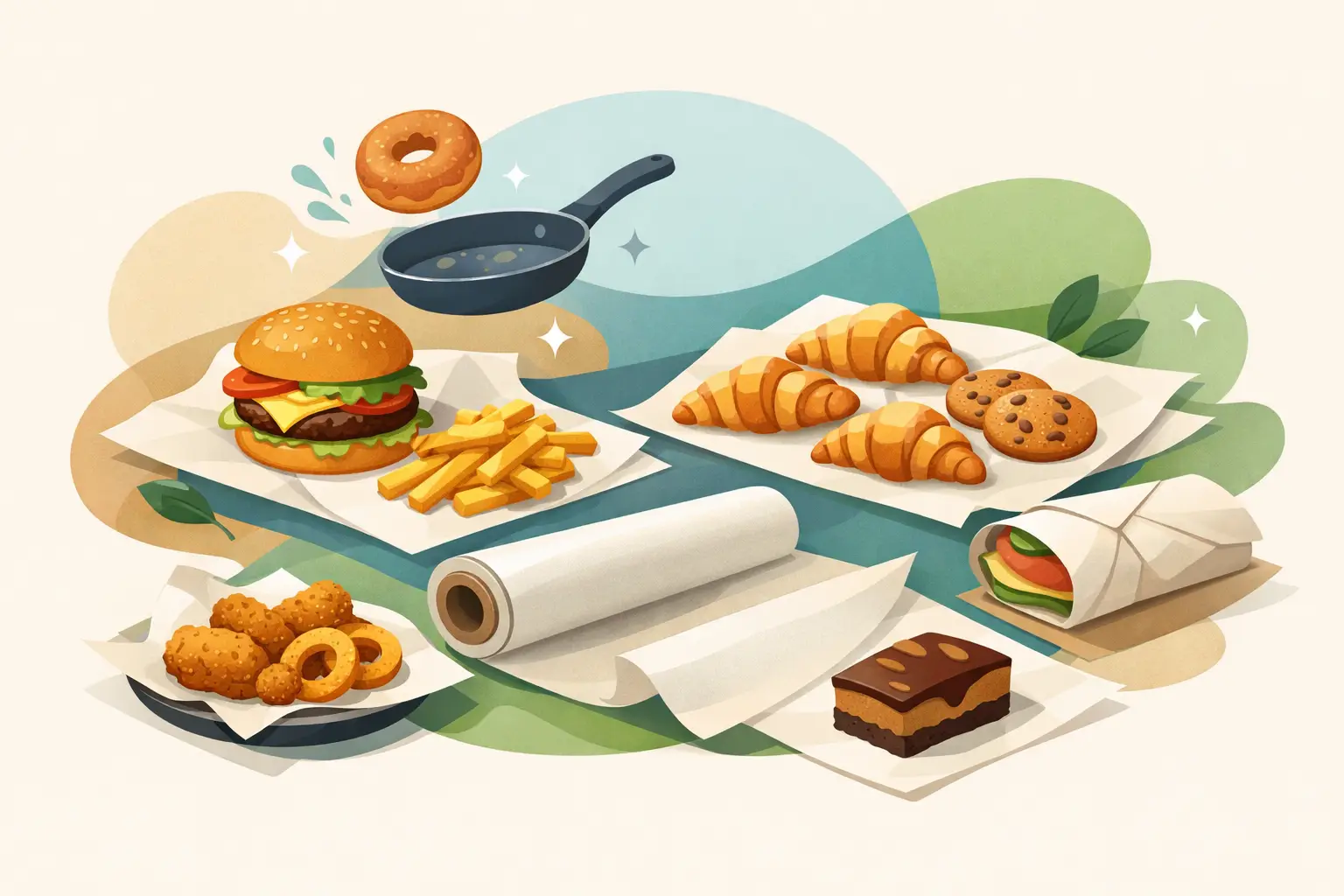
Greaseproof paper is primarily used as a barrier between food and the outer packaging, serving surface or customer’s hands. It resists grease penetration better than standard paper, which makes it useful for foods such as burgers, sandwiches, pastries, pizza slices, chips, fried items and cakes.
In practical terms, that means it is often used to wrap handheld foods, line baskets and trays, separate bakery products, and improve the presentation of dine-in and takeaway orders. It can also support hygiene and speed of service. Staff can wrap or line items quickly without overcomplicating the packing process, which matters when turnover is high.
That said, the exact use depends on the food type. A dry baked product and a freshly fried portion of chips place different demands on the paper. Grease resistance helps in both cases, but sizing, thickness and format still need to suit the application.
The most common uses of greaseproof paper
Wrapping burgers, sandwiches and burritos
One of the most common applications is wrapping food that customers eat by hand. Burgers, toasties, wraps and burritos all benefit from a paper that helps contain grease without immediately soaking through. This keeps the product tidier to hold and helps maintain a better customer experience, especially for takeaway and delivery.
For operators, wrapped food also presents better. A printed sheet turns an otherwise standard item into branded packaging with very little change to service flow. Instead of adding another box or label, the wrap itself does part of the branding work.
Lining trays, baskets and takeaway boxes
Greaseproof paper is widely used as a tray or basket liner in cafés, restaurants, street food units and casual dining venues. It creates a cleaner contact surface between the food and the serving container, while also improving the overall look of the dish.
In takeaway boxes, liners help absorb some surface grease and stop food from sitting directly against the board or carton. This is particularly useful with loaded fries, fried chicken, pastries or slices served in grab-and-go formats. It is a small detail, but it can make packaging feel more considered.
Presenting bakery and deli items
Bakeries and sandwich counters often use greaseproof sheets for cakes, pastries, cookies, traybakes and filled rolls. Butter, oils and icing can mark standard paper quickly, whereas greaseproof stock holds up better during display and service.
This matters at the counter as much as it does after purchase. A neat sheet under a slice of cake or around a panini helps maintain presentation from display case to customer handover. It also reduces the risk of packaging looking tired before the food is even served.
Separating products in storage or prep
Greaseproof paper can also be used behind the scenes. Kitchens and bakeries sometimes place sheets between products to stop sticking and make stacks easier to handle. This is useful for baked goods, dough-based items or prepared portions that need to be separated before service.
It is not a substitute for every prep material, and it should always suit the food and storage conditions involved. Still, in many operations it helps keep prep organised without adding unnecessary complexity.
Why businesses choose greaseproof paper over standard paper
The main reason is straightforward: standard paper is more likely to let oils show through. Once that happens, the packaging can feel lower quality and less hygienic, even if the food itself is good. Greaseproof paper helps avoid that by creating a better barrier.
There is also a presentation advantage. Food looks sharper on a purpose-made liner or wrap than it does in generic paper. For businesses investing in product quality, interiors and customer experience, the packaging should not be the weak point.
From an operational point of view, greaseproof paper is simple to integrate. Sheets can be kept at the pass, front counter or prep station and used without slowing down service. If the paper is supplied in the right size, staff do not need to trim it down or work around awkward formats.
What is greaseproof paper used for beyond grease control?
Although grease resistance is the key function, that is not the only reason businesses use it. In many hospitality settings, greaseproof paper also supports branding, portion presentation and consistency across sites or service periods.
A custom printed sheet can make a burger basket, sandwich wrap or bakery box feel more branded without requiring expensive packaging formats. That matters for independents and growing multi-site operators alike. Customers may not comment on the paper directly, but they do notice when packaging looks coherent.
It also helps with perceived quality. A branded wrap around a warm sandwich or a printed liner under loaded fries can make the product feel more established and deliberate. In crowded takeaway markets, those details contribute to repeat business.
Where greaseproof paper works best – and where it depends
Greaseproof paper performs well across a wide range of foods, but there is no one-size-fits-all answer. The right specification depends on how greasy the food is, how long it will sit in packaging, whether it is for dine-in or delivery, and whether the sheet is wrapping or lining.
For example, a bakery using paper for pastries may prioritise clean presentation and easy handling. A burger takeaway may need a size and print layout that wraps neatly and holds up during transport. A fish-and-chip shop may be thinking more about hot, freshly fried food and service speed.
This is where buyers sometimes run into problems with generic stock. A sheet can be technically greaseproof but still wrong for the job if the size is unsuitable or the print area does not work well in use. Practical packaging needs to fit the product and the pace of service.
The role of custom printed greaseproof paper
For food businesses, custom print turns a functional packaging item into a brand asset. Instead of relying on plain wraps or stickers to carry identity, the paper itself reinforces the business name, logo or visual style.
That has a few commercial benefits. First, it improves presentation without requiring a full packaging overhaul. Second, it creates consistency across menu items. Third, it helps food look more recognisable in customer photos, collection orders and delivery handovers.
There is also a procurement benefit when ordering is straightforward. For busy operators, the process matters almost as much as the product. Clear artwork setup, proofing support, sample access and dependable lead times reduce friction. That is especially useful when packaging needs to be reordered regularly rather than as a one-off project.
Choosing the right greaseproof paper for your business
If you are buying greaseproof paper for commercial use, start with the food itself. Think about whether you need wrapping sheets, tray liners or both, and whether your products are better suited to standard sizes or a bespoke format. A sandwich bar and a pizza outlet are unlikely to need the same sheet dimensions.
Then consider branding requirements. If print is important, make sure the paper works visually in the way it will actually be folded or presented. A design that looks strong on a flat proof still needs to perform when wrapped around real food.
Sustainability is another factor. Many operators now want packaging that supports environmental goals as well as service needs. Greaseproof Packaging, for example, supplies options designed for food businesses that want grease resistance, custom print and eco-friendly material choices without slow turnaround.
The best choice is usually the one that fits your menu, service style and reorder pattern rather than the cheapest paper available. Packaging is handled constantly, seen by every customer and closely tied to food presentation. If it fails, it is visible.
Greaseproof paper earns its value when it keeps food tidy, supports branding and works without fuss in a busy service environment. If your current wrap or liner is letting the product down, that is usually the point to change it.
Continue reading
- © 2026 Greaseproof Packaging
- Registered: SC759437
- VAT Reg No: 444972955
- © 2026 Greaseproof Packaging
- Registered: SC759437
- VAT Reg No: 444972955