How Recyclable Burger Wrap Paper Performs
- May 22, 2026
- News
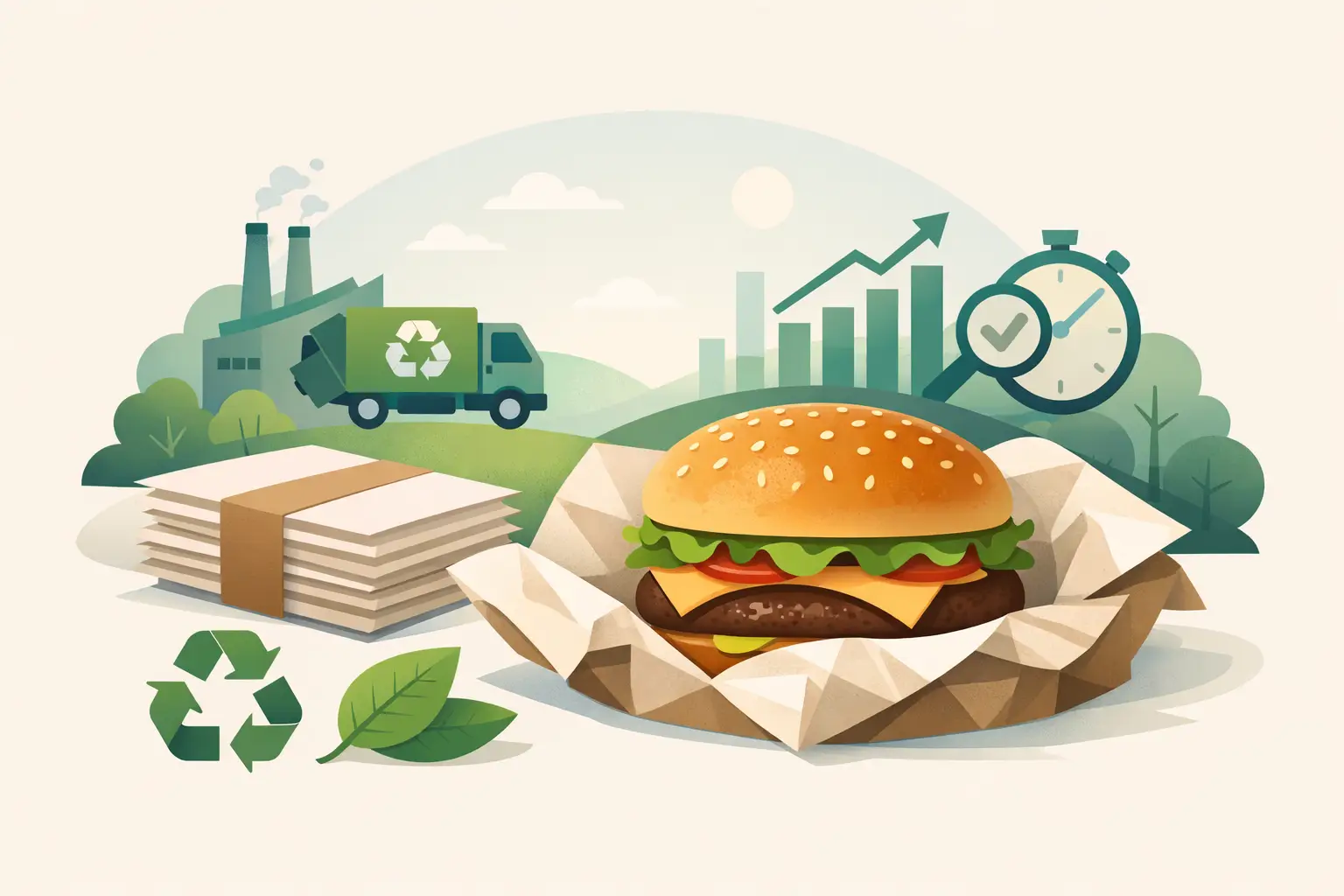
A burger wrap has to do more than look tidy on the pass. It needs to hold heat without turning soggy, manage grease without falling apart, and keep your branding consistent from counter to customer. That is why recyclable burger wrap paper matters for busy food businesses. It sits right at the point where presentation, food handling and environmental expectations meet.
For burger shops, takeaway operators and cafés, wrap paper is not a minor detail. It affects how the food is handled, how the brand is seen and how practical the service becomes during a rush. If the paper is too thin, it tears. If it is too glossy or heavily treated, recycling can become less straightforward. If it does not fit the product properly, service slows down and presentation suffers.
What recyclable burger wrap paper needs to do
In a commercial setting, burger wrap paper has a short job but an important one. It needs to cope with heat, moisture and fat while still being easy for staff to use at speed. A wrap that sticks to the bun, leaks through or collapses halfway through eating creates a poor customer experience very quickly.
Recyclable burger wrap paper should therefore be judged on performance first, then sustainability credentials second, not because sustainability matters less, but because packaging that fails in service usually creates waste elsewhere. If a burger has to be rewrapped, double wrapped or packed with extra napkins to compensate, the environmental benefit becomes less clear.
Good burger wrap paper should feel balanced. It needs enough grease resistance to protect hands and outer packaging, but not so much treatment that disposal routes become confusing. It should fold cleanly, stack well and remain workable during peak periods. These are practical details, but they are the ones that determine whether a product earns repeat orders.
Recyclable burger wrap paper and grease resistance
This is where buyers often have to make a considered choice. Burgers are one of the more demanding food products for wrap paper because they combine heat, fat, moisture and handling pressure. A dry sandwich and a double cheeseburger do not place the same demands on packaging.
Why the coating question matters
Paper can be recyclable, but the full answer depends on how it has been manufactured, what treatments have been applied and how contaminated it becomes in use. In foodservice, grease contamination is often the real issue. Even recyclable burger wrap paper may not be accepted in every waste stream once it is heavily soiled with food residue.
That does not make recyclable paper a poor choice. It simply means buyers should avoid treating sustainability as a single claim printed on a spec sheet. The better question is whether the wrap paper has been designed to give workable grease resistance while still supporting more responsible disposal options than plastic-heavy alternatives.
Performance still comes first
If you serve a loaded burger with sauces, melted cheese and fried toppings, you will need a paper grade that can cope. A lighter sheet may suit a simpler menu, but a heavier or better-engineered greaseproof option can be a safer operational choice for premium or messy builds. The right specification depends on the food, not just the trend towards eco packaging.
Branding is part of the job
Burger wrap paper is often the first branded surface the customer sees when the order arrives. In dine-in, takeaway and delivery, that matters. Plain stock does the basic job, but custom printed wrap turns a functional sheet into part of the presentation.
This is especially useful for operators who want the product to look consistent across trays, baskets, takeaway bags and social content. A good burger photographed in generic paper looks like someone else’s meal. The same burger in branded wrap is immediately identifiable. That is a practical brand asset, not just a design preference.
For many operators, recyclable burger wrap paper works best when it combines clear eco credentials with strong print quality. There is little value in choosing a more sustainable option if the print rubs off, looks dull or fails to reflect the standard of the food. Buyers should expect both.
Sizing affects speed more than most buyers expect
One of the most common packaging mistakes is using a sheet size that is almost right. It sounds minor, but in service it creates hesitation, inconsistent wrapping and more paper usage than necessary. Staff either fight to close the wrap properly or use two sheets where one would have done.
Standard sizes are useful, but not always enough
If your burger range is fairly consistent, a standard sheet can work perfectly well. But if you serve anything from smashed burgers to stacked house specials, a bespoke size may save time and reduce waste. It can also improve presentation, especially if you want a cleaner fold or a neater basket liner.
This is where specialist suppliers tend to be more useful than general packaging wholesalers. Being able to match the paper size to the menu item is not a luxury. It is a practical way to make wrapping more repeatable and less wasteful.
What buyers should ask before ordering
Commercial packaging decisions are usually made under time pressure, so the basics need to be clear early. Before placing an order for burger wrap paper, it helps to confirm how the paper performs with hot and greasy foods, what size is actually needed, and how artwork will appear on the final sheet.
Proofing support is particularly useful when the wrap is printed. A logo that looks fine on screen can become too small, too dense or too faint once repeated across a greaseproof pattern. Free mockups and proof approval are not extras for the sake of it. They help prevent expensive reprints and avoid delays caused by artwork issues.
Sample requests can also be worthwhile, especially if you are changing from unprinted sheets or moving from a less sustainable material. Paper feel, folding behaviour and grease handling are easier to judge in hand than on a specification table.
Why UK manufacturing can make a real difference
For food businesses running tight stock windows, long packaging lead times create problems quickly. Delays mean compromise orders, mixed branding or last-minute substitutions. That is why local production matters when service continuity is a priority.
UK manufacturing can reduce lead times, simplify communication and make repeat ordering more dependable. If the supplier also offers a clear proofing process and a defined delivery window, procurement becomes more manageable. That matters far more to most operators than broad marketing claims.
For businesses ordering custom printed wrap, speed has to be matched by consistency. Fast turnaround is useful only if the print, size and paper quality remain reliable from one order to the next. That is where a specialist supplier tends to add value.
Sustainability claims need to be practical
Many food businesses want packaging that aligns with customer expectations and internal sustainability targets. That is reasonable, but it helps to stay grounded. Recyclable burger wrap paper is a strong option when it has been selected for the actual menu and service model, not just because the wording sounds attractive.
A paper that is recyclable in principle but performs badly in use is not an efficient packaging choice. Equally, a high-performing wrap that supports recyclable, biodegradable or compostable material goals may be the more commercially sensible route. The right answer depends on your food, your waste handling arrangements and how your customers use the packaging after purchase.
That is why supplier guidance matters. A specialist packaging manufacturer should be able to explain the trade-offs clearly, recommend suitable paper grades and help you avoid ordering something that sounds right but works poorly in practice.
Choosing recyclable burger wrap paper for your operation
The best buying decision usually comes down to three things: food type, service speed and brand presentation. If your burgers are heavily dressed, prioritise grease handling. If your team wraps at pace during peak trade, focus on a sheet size and finish that work quickly in hand. If brand consistency matters across dine-in and takeaway, make sure the print quality supports that standard.
For operators who want a more straightforward ordering process, Greaseproof Packaging keeps those requirements practical with custom sizing, artwork support, free mockups and a clear turnaround from proof approval. That kind of structure saves time because it removes uncertainty before the order is printed.
Recyclable burger wrap paper is not just a packaging upgrade. Used properly, it helps you serve cleaner, present better and make more confident material choices without adding friction to service. The useful question is not whether the paper makes a claim. It is whether it works every day, on the food you actually sell.
Continue reading
- © 2026 Greaseproof Packaging
- Registered: SC759437
- VAT Reg No: 444972955
- © 2026 Greaseproof Packaging
- Registered: SC759437
- VAT Reg No: 444972955