Are Paper Wraps Recyclable? A Food Business Guide
- November 4, 2026
- News
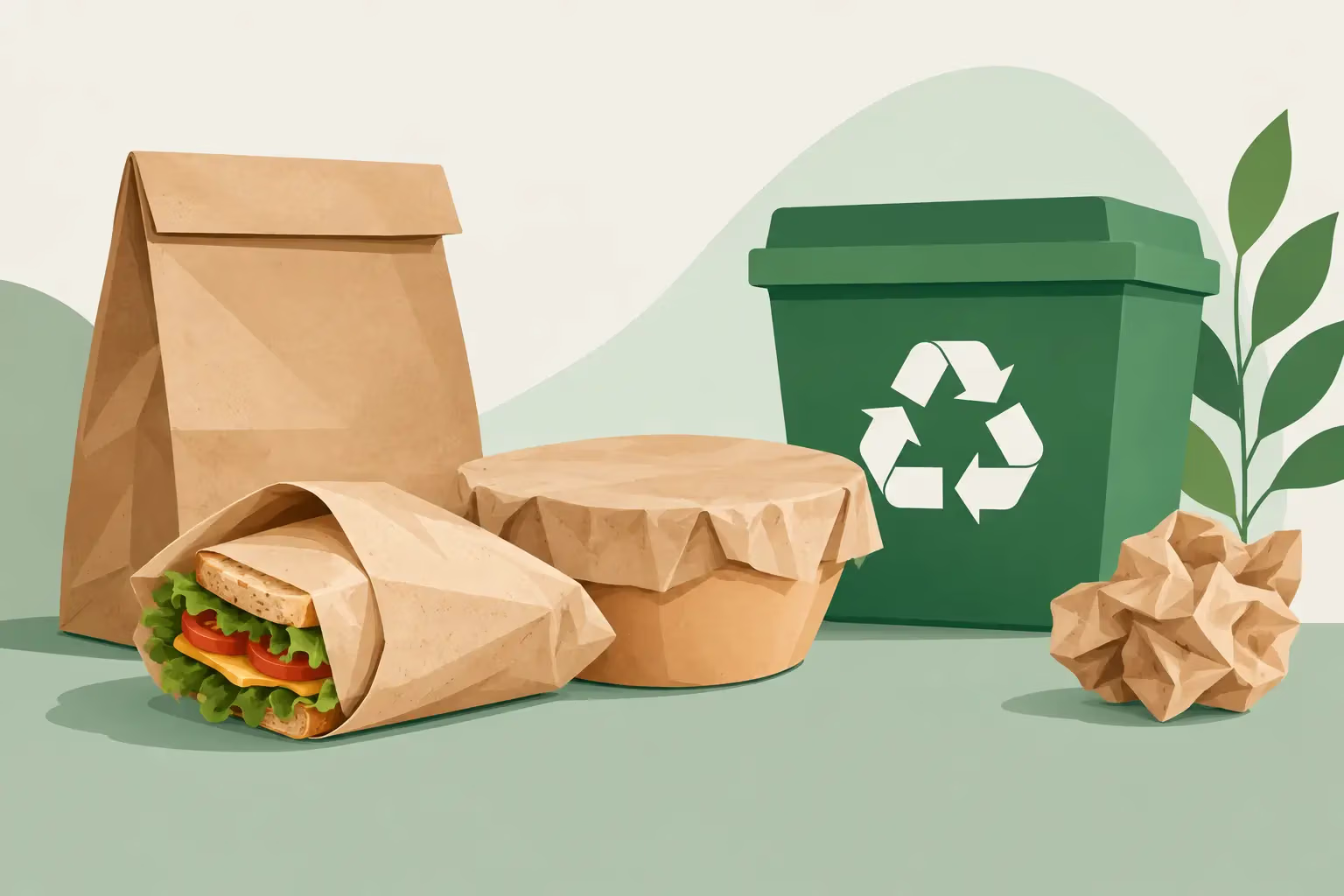
A burger wrap can look like ordinary paper, but once it has held hot food, oil and sauce, its route after use is less straightforward. Are paper wraps recyclable? Sometimes, but the answer depends on the paper specification, any coating or laminate, the level of food contamination and the recycling facilities available locally.
For takeaway and hospitality businesses, this is not a minor detail. Customers increasingly notice packaging claims, while operators need wraps that protect food, carry a clear brand message and fit into practical waste arrangements. The most credible approach is to choose materials carefully and describe disposal options accurately rather than applying a blanket recycling claim to every used sheet.
Are paper wraps recyclable after food service?
Clean, dry paper wraps made from recyclable paper fibres can usually be accepted in paper recycling streams. The challenge is that food wraps are rarely clean by the time a customer has finished eating. Grease, cheese, sauces and moisture can affect the quality of recovered paper fibres and may mean a recycling operator rejects the material.
A wrap used to line a tray beneath dry bakery goods may remain suitable for recycling if it is clean and accepted by the local collection service. A sheet wrapped around a loaded burger or fish and chips is more likely to be contaminated. In that case, recycling is not always the right disposal route, even if the base paper itself is recyclable.
This distinction matters when communicating with customers. Saying that a product is made from recyclable paper is different from saying that every used wrap can go in a household recycling bin. Food businesses should avoid wording that overpromises on an outcome they cannot control.
The material specification comes first
Not all paper wraps are made the same way. A standard paper wrap may be recyclable where clean. Greaseproof paper is designed to resist oils and moisture, and its end-of-life options depend on how that grease resistance has been achieved.
Some food papers use a fibre-based construction that remains widely recyclable or compostable under suitable conditions. Others may include plastic coatings, wax layers, foil elements or laminated films. These can make recycling more difficult because the material needs specialist separation or is not accepted in standard paper streams.
Before ordering printed food wraps, ask for the product specification rather than relying on appearance. A paper-like finish does not automatically mean a wrap belongs in paper recycling. Your supplier should be able to explain the material composition, intended disposal route and any conditions attached to environmental claims.
What makes a paper wrap difficult to recycle?
There are four common factors: food contamination, mixed materials, heavy ink coverage and local collection rules. Each can change the practical answer for your customers.
Food contamination is usually the biggest issue in hospitality. Recycling mills need usable paper fibre. A lightly marked sandwich wrap may be acceptable in some areas, but a heavily saturated wrap can compromise other recyclables. Separating clean unused offcuts from used customer-facing waste is therefore worthwhile in kitchens and prep areas.
Mixed materials are the next consideration. Paper bonded to plastic film, foil or other barrier layers cannot always be processed with standard paper recycling. If grease resistance and heat performance are essential for your menu, the right choice may still be a specialist barrier paper, but its disposal instructions should reflect that construction.
Printing is not automatically a barrier to recycling. Well-specified food-safe inks on suitable paper can work effectively for branded wraps. However, very high ink coverage, metallic finishes, adhesives and additional labels can complicate processing. This is one reason to review artwork alongside the paper choice, particularly where sustainability messaging is central to your packaging decision.
Finally, collection services vary between councils and commercial waste providers. A material accepted by one operator may not be accepted by another. For a multi-site business, local variation can make one universal customer instruction unrealistic.
Recyclable, biodegradable and compostable are not interchangeable
These terms are often grouped together, but they describe different things. Using them precisely protects your business from confusing customers and helps procurement teams compare like with like.
Recyclable means a material can be collected, sorted and reprocessed into a new material, subject to the relevant waste system accepting it. It does not guarantee that every item will be recycled after use.
Biodegradable means a material can break down over time through natural processes. On its own, the term does not state how quickly this happens, what conditions are required or whether a household bin is the appropriate route.
Compostable materials are designed to break down into compost under defined conditions. Some are intended for industrial composting facilities, while others may meet home-composting standards. These are separate claims, and neither automatically means the material should go into paper recycling.
For food businesses, the best material is often the one that matches the menu, service model and available waste route. A café with controlled back-of-house waste may be able to support a different solution from a high-volume takeaway where most packaging leaves the premises with the customer.
Choosing wraps that work for food and waste handling
Start with the food rather than a broad environmental label. Consider how much oil, steam and sauce the item produces, how long it remains wrapped and whether customers eat on site or take it away. A dry pastry bag, a burger wrap and a pizza liner have different performance demands.
Then ask suppliers direct questions about the paper and any treatment used to create grease resistance. Confirm whether the product is recyclable when clean, compostable under specified conditions, or suitable for general waste once food-soiled. Clear answers at this stage avoid inaccurate claims later.
It is also sensible to request samples before committing to a larger printed order. Test the wrap with the actual food, including the holding time during busy service. Check whether grease shows through, whether the sheet tears when folded, whether print remains clear and whether the wrap can be handled efficiently by staff wearing gloves.
At Greaseproof Packaging, this practical stage can include sample requests, artwork support and proof approval before production. For operators, it is the point where branding, food performance and material information should be checked together rather than treated as separate decisions.
Keep disposal messaging short and honest
A small disposal message can be useful, but only if it is accurate and readable. Packaging is not the place for lengthy qualifications. Where appropriate, wording such as “recycle if clean and accepted locally” gives customers a realistic instruction without implying that a grease-soaked wrap belongs in every recycling bin.
If your wrap is compostable only in industrial facilities, say so clearly. Do not use compostable as a substitute for recyclable, and avoid symbols or claims that customers may interpret as universal kerbside acceptance. The same principle applies to biodegradable materials.
For on-site dining, clear bin signage can make more difference than printing additional claims on every sheet. Staff also need to know whether clean paper offcuts, unused wraps and food-soiled used wraps should be separated. Simple procedures are more likely to be followed during a busy lunch or evening service.
A practical approach for takeaway operators
The most effective packaging decisions balance customer expectations with the realities of foodservice. Choose a wrap that performs properly for the menu, obtain a clear material specification, test it in service and make only claims you can support. Then review the waste route used at your premises and the likely route available to customers.
There will be occasions when a wrap is technically recyclable but not likely to be recycled after use because it is too greasy. That does not make the packaging choice pointless. It means the claim needs context, and food businesses should focus on reducing unnecessary material, using appropriately specified paper and avoiding complex mixed-material formats where they are not needed.
A well-chosen branded wrap should do more than carry a logo. It should keep food presentable, help staff work quickly and give customers clear, credible information about what happens next.
Continue reading
- © 2026 Greaseproof Packaging
- Registered: SC759437
- VAT Reg No: 444972955
- © 2026 Greaseproof Packaging
- Registered: SC759437
- VAT Reg No: 444972955