How to Speed Packaging Approval for Food Orders
- October 23, 2026
- News
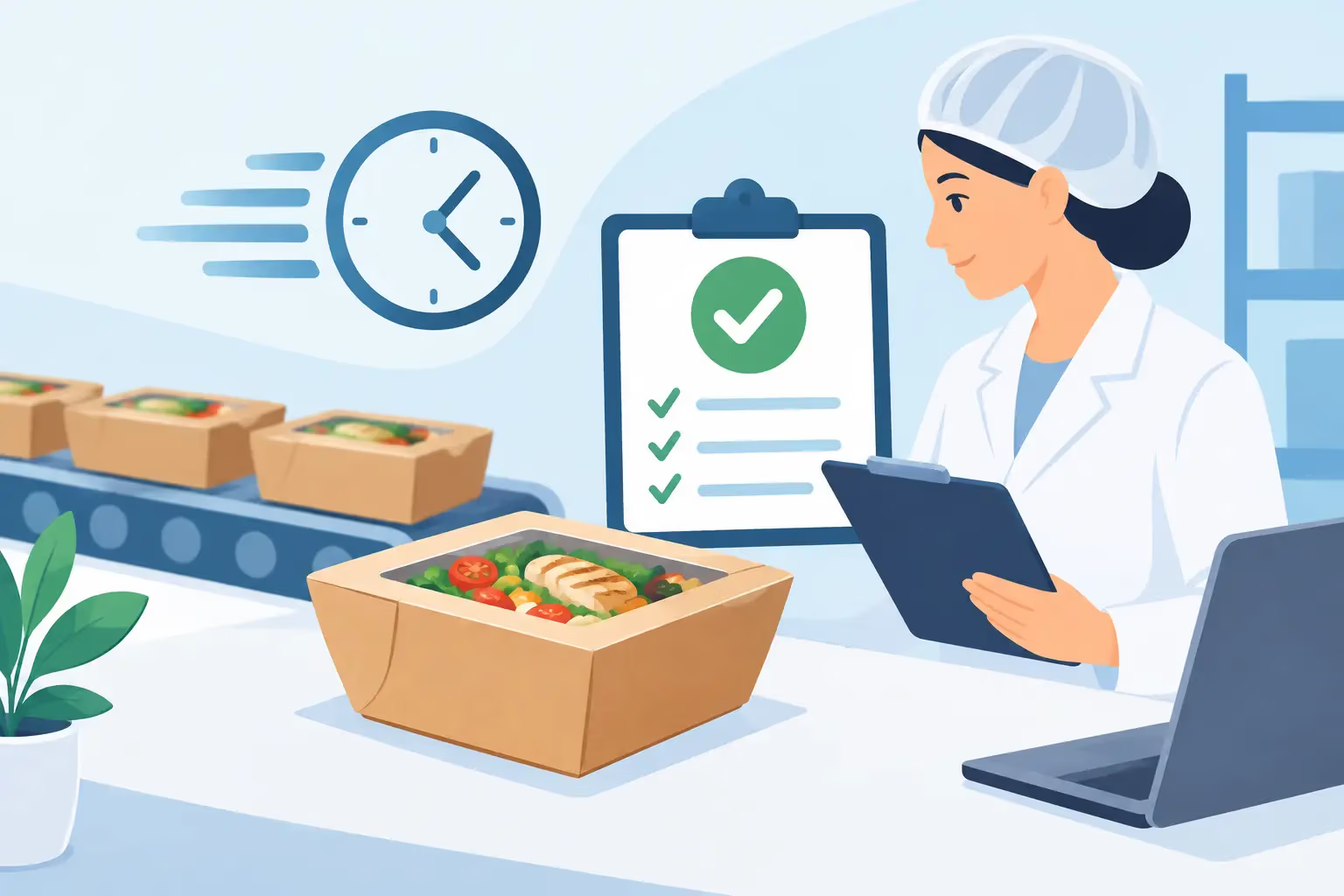
A delayed proof can hold up an entire packaging order, even when the food business is ready to launch, reopen or prepare for a busy period. Knowing how to speed packaging approval means treating artwork, sizing and sign-off as operational decisions, not last-minute admin. For branded greaseproof paper, a few clear choices at the start can prevent days of back-and-forth and keep your delivery date on track.
Start with a print-ready artwork file
The fastest approval process starts before an order is placed. A logo copied from a social media profile, a low-resolution screenshot or an image taken from a menu will usually need extra work before it can be printed clearly. That creates delays at the proofing stage and can affect the finish of the final sheets.
Where possible, supply your logo as a vector file, such as AI, EPS, SVG or print-ready PDF. Vector artwork stays sharp when scaled for different sheet sizes, whether you are ordering small burger wraps or larger paper for pizza, fish and chips or bakery products. High-resolution PNG files can also work for some designs, but they should be supplied at the correct size and quality.
Keep the artwork simple where speed matters. A single-colour logo or repeating pattern is often quicker to approve than a detailed illustration with fine lines, gradients and several brand colours. This is not a reason to dilute your identity. It is a practical choice when you need printed packaging quickly, and a clear, confident design usually performs better on food wraps anyway.
Check ownership before sending the file
Make sure the person approving the order has access to the final logo, correct brand colours and agreed wording. It is common for an owner, designer and marketing manager to each hold slightly different versions of the artwork. Resolving that after a proof has been created adds unnecessary delay.
If your design includes a tagline, website address, allergen message or social handle, check every character before submission. A proof is there to confirm the print layout, but it should not become the first time the business reviews its own copy.
Decide the sheet size and use before proofing
Artwork approval is much quicker when the intended use is already clear. A greaseproof sheet for lining a burger basket has different practical requirements from one used to wrap a burrito, present a cake slice or cover a sandwich.
Choose the size based on the food product, serving format and how staff will use it during service. A wrap that is too small may look smart on screen but create handling problems on a busy counter. One that is unnecessarily large can increase material use and cost per serving. If you use more than one item format, it may be worth ordering different sheet sizes rather than forcing one size to do every job.
The print layout should follow that decision. A repeating logo pattern gives a consistent branded result from any angle and suits wrapping, lining and folding. A centred design can work well for flat presentation, such as serving trays or bakery displays, but may disappear into a fold when used as a wrap.
Providing this context at the outset helps the supplier create a useful proof rather than a technically correct layout that does not suit real service conditions.
How to speed packaging approval with one decision-maker
The most common cause of delayed approval is not the proof itself. It is waiting for several people to comment independently. One person wants a larger logo, another prefers a different sheet orientation, and someone else notices that the approved logo is not the latest version.
Assign one person to collect internal feedback and send a single, final response. That person should have authority to approve the artwork, quantity and delivery details. For independent cafés, takeaways and restaurants, this is often the owner or manager. For multi-site operators, it may be a procurement lead or brand manager.
Set an internal deadline too. If the packaging is needed for an event, menu launch or seasonal promotion, do not wait until the final week to circulate the proof. Print production and delivery schedules begin after approval, not when the artwork is first uploaded.
A practical approval response should be unambiguous. Either confirm that the proof is approved for print or list every required amendment in one message. Comments such as “looks nearly right” or “can we make it pop?” make it harder to act quickly because they do not identify a measurable change.
Review the proof for print, not just appearance
A digital proof shows how your artwork will be arranged on the sheet. It is the point to verify dimensions, logo placement, repeat pattern, colour choice and spelling. Review it on a larger screen where possible rather than relying only on a phone, especially if the design includes small type.
Focus on the details that cannot easily be changed once production has started:
- Is the business name spelled correctly?
- Is the logo positioned and repeated as expected?
- Does the chosen sheet size suit the intended food item?
- Are the contact details, taglines and social handles current?
- Has the correct print colour been specified?
Colour deserves particular care. Screens vary, so a colour displayed on a phone or laptop is not a guaranteed match for the finished print. If a precise brand shade is essential, provide the relevant colour reference and discuss what is achievable on greaseproof paper. Paper texture, ink coverage and the nature of food-safe printing can all influence the final appearance.
This is one of the trade-offs to manage properly: a highly exacting colour match may require more discussion, while a standard brand colour choice can keep the process moving. Neither option is automatically right. It depends on how tightly controlled your brand guidelines are and how quickly the order is needed.
Request samples when they will answer a real question
Samples can be useful when you are testing sheet sizes, assessing paper feel or deciding whether a design works with your menu items. They are particularly worthwhile for a first order, a new product launch or a move from generic wrap to branded packaging.
However, samples can add time if they are requested after every other decision has already been made. Ask for them early when they will help you choose between meaningful options. For repeat orders using an established design and size, moving directly to proof approval is usually the more efficient route.
Test samples in service conditions where possible. Wrap an actual burger, line a portion of chips or place a sandwich in its usual takeaway packaging. Check whether the paper is easy for staff to handle, whether the print is visible when folded and whether the size supports a tidy presentation.
Keep changes contained once proofing begins
A proof is not the best stage to rethink the entire brief. Changing the logo, sheet size, print colour and quantity at the same time can mean a new proof is needed and may affect the production schedule.
If something genuinely needs changing, send all revisions together. It is far faster to issue one updated proof than to make a sequence of minor amendments. Keep feedback specific, for example: “Please reduce the logo by 15% and repeat it in the same pattern,” rather than “make the print less busy”.
For businesses ordering packaging regularly, retain an approved artwork file and record the exact specification: paper size, print colour, design version and quantity. This turns future ordering into a repeatable process rather than a new design project each time. It also protects consistency across locations, staff changes and busy trading periods.
Build approval time into your ordering routine
Fast turnaround relies on prompt sign-off. Once artwork is approved, UK-made printed greaseproof paper can move into production and be delivered within a defined working-day window, but that timetable cannot begin while a proof remains awaiting approval.
Plan backwards from the date the packaging must be in use. Allow time for artwork preparation, proof review, any amendments, production and delivery. Add extra contingency before bank holidays, seasonal peaks and major events, when food businesses often need higher packaging volumes at the same time.
Greaseproof Packaging supports the process with artwork upload, free mockups and proofing support, helping operators move from an idea to an approved design without unnecessary complexity. The quickest orders are usually the ones where the food business has made the key decisions early and responds decisively when the proof arrives.
Branded food paper should make service look more considered, not create another procurement headache. Prepare the right artwork, nominate one approver and treat the proof as a final operational check. That gives your team the best chance of receiving packaging ready for the counter when it is needed.
Continue reading
- © 2026 Greaseproof Packaging
- Registered: SC759437
- VAT Reg No: 444972955
- © 2026 Greaseproof Packaging
- Registered: SC759437
- VAT Reg No: 444972955