
Food Service Sheet Size Guide for Every Menu
- October 25, 2026
- News
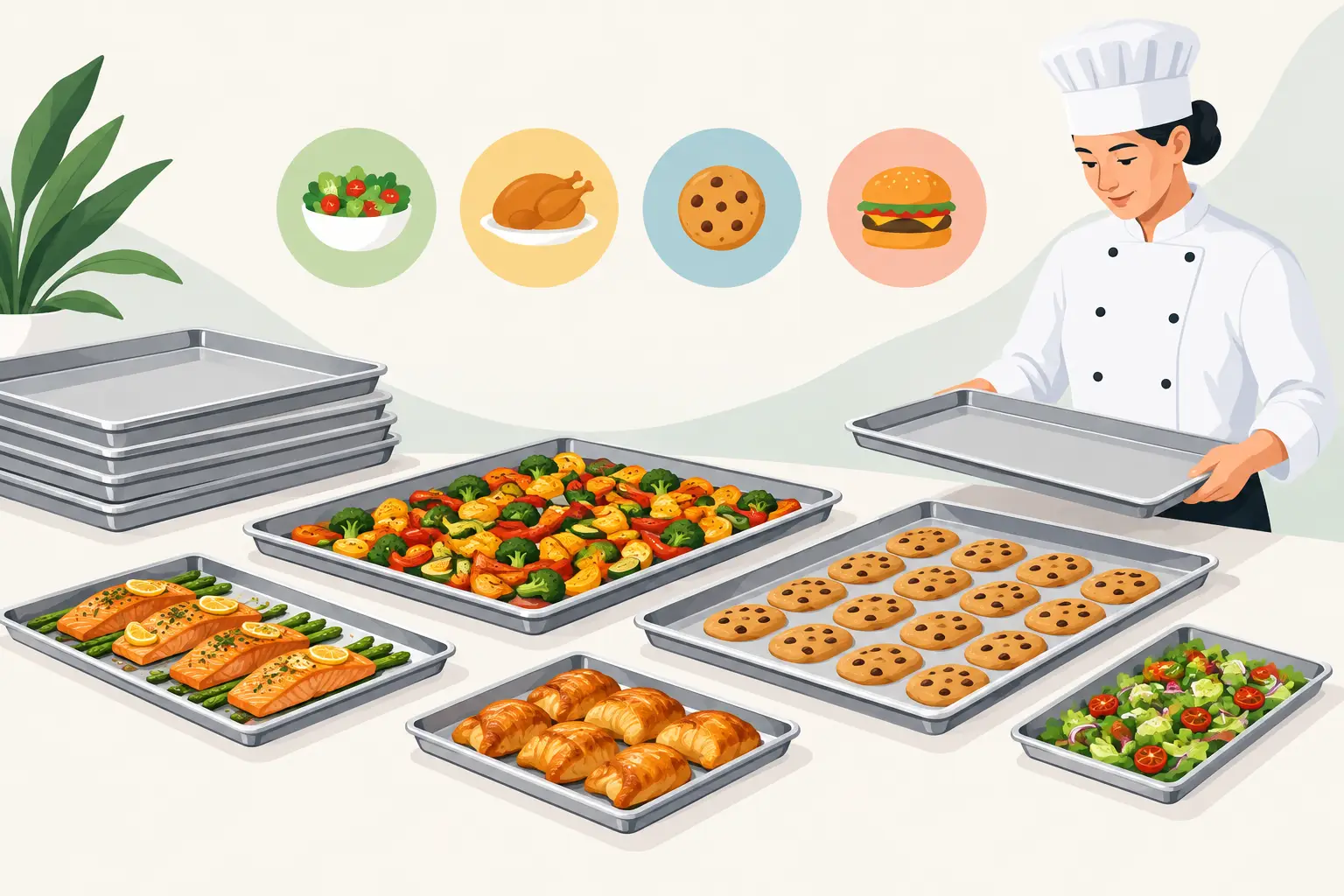
A sheet that is too small leaves a burger exposed at the base. One that is too large slows wrapping, uses more material and can make a neatly packed order look untidy. This food service sheet size guide helps you match greaseproof paper to the food you serve, the way it is presented and the pace of your operation.
For busy cafés, takeaways and restaurants, sheet size is not a minor specification. It affects portion control, staff speed, food protection and the amount of branded print a customer sees when they open their order. The right size gives you enough paper to wrap or line securely without unnecessary overhang.
Food Service Sheet Size Guide: Start With the Product
Measure the finished item, not just its ingredients. A burger’s diameter matters, but its height, toppings and packaging method matter too. The same is true for a sandwich with a generous filling, a loaded portion of chips or a slice of cake with soft icing.
As a working rule, the paper should extend beyond the food far enough to fold, tuck or hold comfortably. For an open basket liner, it needs to cover the base and rise slightly at the sides. For a fully wrapped item, it needs enough excess to secure the ends without crushing the food.
A practical way to assess a size is to place the finished product in the centre of a sample sheet and complete the wrap exactly as your team would during service. Check whether the fold stays closed, whether the paper catches on sauces or fillings, and whether the printed design remains visible. This is more reliable than choosing a size from a product photograph alone.
Common Greaseproof Sheet Sizes and Uses
The dimensions below are useful starting points for most foodservice applications. The best choice still depends on your portion size, tray dimensions and preferred wrapping style.
250 × 250 mm
A 250 mm square is well suited to smaller food items and light lining jobs. It works for cookies, traybakes, pastries, small sandwiches, toasties and snack portions. It can also line smaller baskets or takeaway cartons where the paper is intended to frame the food rather than fully enclose it.
This size keeps material use controlled, but it is rarely generous enough for tall burgers or overfilled wraps. If your staff need to pull the corners over the top of the product, move up a size rather than asking them to force a tight wrap.
300 × 300 mm to 330 × 330 mm
These square sizes are among the most versatile choices for cafés, burger outlets and sandwich businesses. They give enough coverage for standard burgers, filled baguettes, deli sandwiches, toasted wraps and moderate chip portions. A 330 mm sheet is often a sensible all-rounder when a menu includes several items of similar scale.
For branded service, this range provides a good print area without overwhelming the product. It is particularly effective where customers eat from a tray, basket or open takeaway box and the sheet acts as both a food liner and a visible brand layer.
350 × 350 mm to 380 × 380 mm
Choose a larger square sheet for stacked burgers, brioche buns, loaded fries, substantial burritos and generously filled wraps. The extra paper makes folding quicker and gives staff more control over sauces, melted cheese and loose toppings.
These sizes also suit larger basket liners and sharing-style portions. If food is served open but likely to move during collection or delivery, a deeper paper edge can help keep the presentation together. The trade-off is higher paper use, so there is little value in using 380 mm sheets for small, dry items that would sit neatly on 250 mm paper.
500 × 335 mm and Other Rectangular Sizes
Rectangular sheets are useful when the food itself is longer than it is wide. They are a practical option for fish and chips, hot dogs, long sandwiches, baguettes, pizza slices and larger takeaway portions. The longer side follows the product, while the shorter side still gives enough material to fold over or line a box.
A rectangular format can reduce waste compared with using an oversized square sheet. It also gives a more controlled result for products that would otherwise sit diagonally on the paper. For fish and chip shops, the right rectangle can support traditional presentation while containing oil and steam more effectively than a poorly sized square.
Match Sheet Size to How You Serve Food
The same burger may need a different sheet size for dine-in and delivery. In a basket, the paper can be mainly decorative and protective, with the basket providing structure. For a takeaway order, the sheet may need to hold the burger together before it reaches a carton or bag.
Consider whether you are using the paper as a liner, a loose wrap or a fully closed wrap. A liner can be closer to the footprint of the tray or box. A loose wrap requires enough paper to bring two sides over the food. A closed wrap needs the greatest allowance, particularly at each end.
Steam is another factor. Fried foods and toasted items can soften if they are wrapped tightly straight from the fryer or grill. A correctly sized greaseproof sheet helps manage surface oil, but it cannot solve every moisture issue. Where food needs to travel, review the paper alongside the carton, venting and packing sequence rather than treating sheet size as an isolated decision.
Account for Your Print Layout
Custom printed greaseproof sheets should be sized around both food and artwork. A repeating logo pattern is forgiving and works well across a range of sizes. A centred design, a message or a detailed illustration needs more thought, because folds may hide part of the print.
If your main aim is brand visibility, choose a sheet that leaves a visible border around the food when it is served open. For wrapped items, ask where the customer will first see the paper when they unwrap it. That is often a better location for a key logo or message than the exact centre of the flat sheet.
At Greaseproof Packaging, artwork is checked through a proofing process before production. Use that stage to confirm not only colours and logos, but also the orientation of the design on the chosen sheet dimensions. A free mock-up and sample request can prevent an expensive guess, especially when introducing a new menu format or switching from plain paper.
Avoid One Size for Everything
Using a single sheet size can simplify ordering, but it is not always the most efficient choice. A burger shop with one core burger and a side of fries may manage perfectly well with one versatile 330 mm or 350 mm sheet. A wider menu of pastries, sandwiches, burgers and pizza will normally benefit from two or three sizes.
Before placing an order, review these operational points with your team:
- the largest finished portion, including toppings and side dishes
- the smallest item likely to be wrapped or lined
- the internal dimensions of baskets, trays and takeaway boxes
- whether staff can fold the paper quickly during peak service
- how the sheet performs after ten to twenty minutes in a delivery bag
This short test can reveal where a smaller sheet is sufficient and where a larger format protects quality. It also helps you avoid paying for paper that is routinely trimmed, doubled over or discarded.
When Bespoke Sizes Make Sense
Standard sizes cover many menus, but bespoke sheets are worth considering when your food or packaging is distinctive. A particular pizza box, branded serving tray, oversized sandwich or unusual platter may look better and operate more efficiently with paper made to fit.
Bespoke sizing is especially useful when standard sheets create consistent waste or fail to sit squarely within a box. It can also help a growing operator standardise presentation across several sites, giving staff a repeatable wrapping method and customers a consistent experience.
For UK food businesses working to a launch date or seasonal campaign, allow time for artwork approval before scheduling stock. Once a proof is approved, Greaseproof Packaging provides a defined 5-7 working day delivery window, helping teams plan packaging around promotions, openings and replenishment.
The most useful sheet is the one your staff can pick up, fold and serve without thinking twice. Start with the food in its final form, test it under real service conditions, and choose the smallest size that still protects the portion and presents your brand properly.
Continue reading
- © 2026 Greaseproof Packaging
- Registered: SC759437
- VAT Reg No: 444972955
- © 2026 Greaseproof Packaging
- Registered: SC759437
- VAT Reg No: 444972955