Printed Deli Paper Sheets for Food Brands
- May 19, 2026
- News
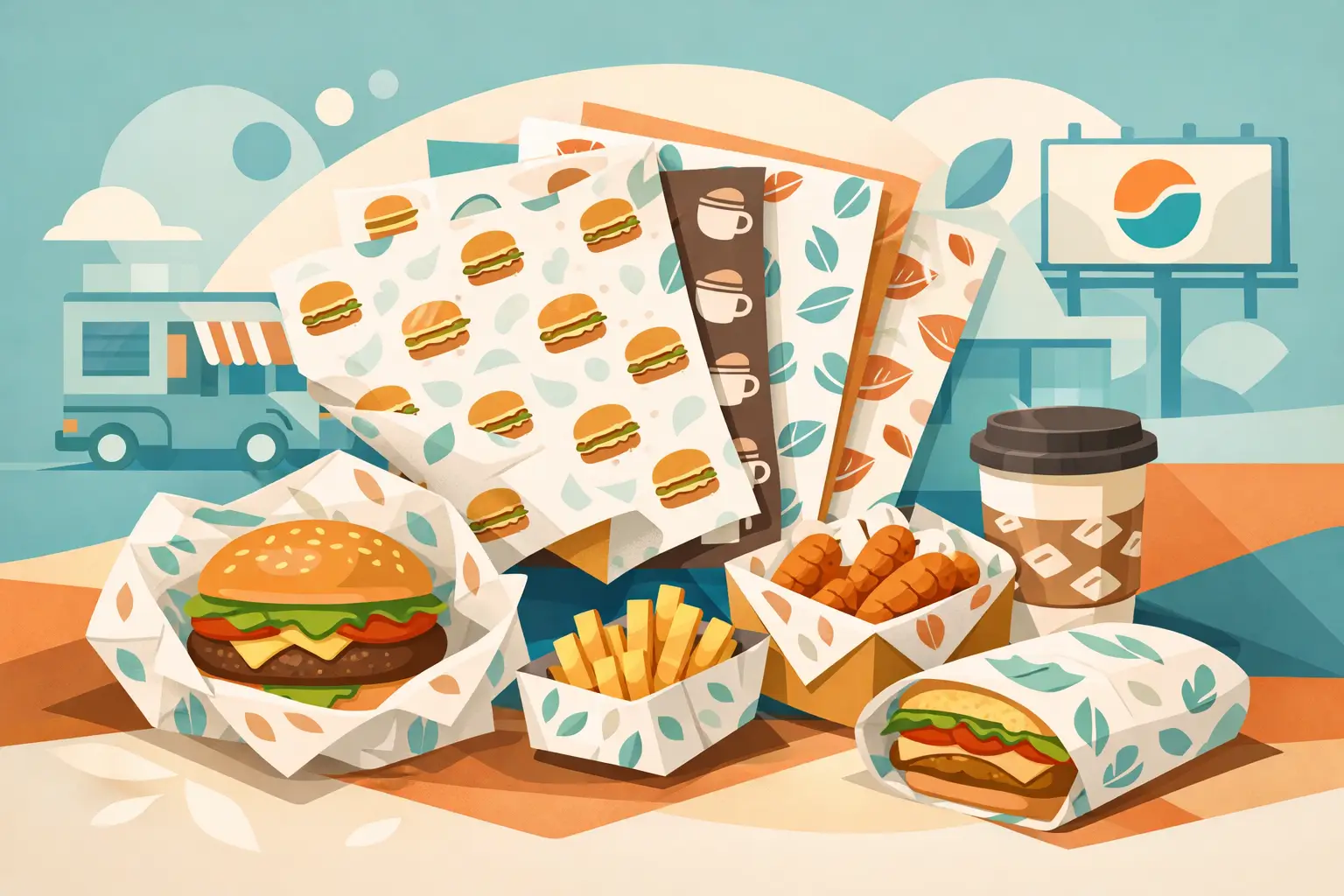
A burger wrapped in plain paper does the job. A burger wrapped in printed deli paper sheets does more than that – it carries your brand into the customer’s hands, across the counter, into delivery bags and onto social media photos. For food businesses, that difference matters because packaging is part of the product experience, not an afterthought.
For busy operators, the appeal is straightforward. Printed deli paper sheets help present food more cleanly, make branding more visible and support a more consistent service standard. They are used to wrap, line and separate food across everything from burgers and toasties to tray bakes, chips and pizza slices. When chosen properly, they also fit service speed, grease resistance and food handling requirements without complicating prep.
What printed deli paper sheets are used for
Printed deli paper sheets are grease-resistant food wrapping sheets designed for direct food presentation. In practical terms, they are there to keep food looking tidy while giving your brand a repeatable presence on every order.
In takeaway and dine-in settings, they are commonly used as burger wraps, basket liners, sandwich wraps, tray liners and interleaving sheets for baked goods. They work particularly well for businesses that serve hand-held food where presentation can quickly become messy if the wrap is too thin, too absorbent or the wrong size.
That versatility is part of their value. A single printed sheet can line a burger box at lunch, wrap a toasted sandwich in the afternoon and present a bakery item at the counter later in the day. For operators managing stock carefully, multi-use packaging often makes more commercial sense than buying separate formats for every menu item.
Why printed deli paper sheets matter in service
Good food packaging should not slow a team down. It should be easy to store, easy to grab during a rush and reliable enough that staff do not have to work around it. That is where printed deli paper sheets earn their place.
First, they improve presentation immediately. A branded sheet under fries or around a burger makes even a simple order look more considered. Customers often read that as a sign of quality, especially in competitive sectors such as burgers, sandwiches and bakery.
Second, they reinforce brand identity without needing extra effort from staff. If your logo, pattern or brand colour is already on the wrap, every order leaves the pass looking on-brand by default. That consistency is difficult to achieve with generic packaging.
Third, they help with handling. Greaseproof material creates a cleaner barrier between food and outer packaging, trays or baskets. That can reduce visible grease marks and help food stay neater during serving and transport. It is not a substitute for the right main packaging, but it does improve the final presentation.
There is a trade-off, though. Printed paper is not one-size-fits-all. A lightweight sheet may be ideal for lining a basket but less suitable for wrapping a loaded burger with a high sauce content. The right specification depends on the food, the service style and how long the product needs to hold before being eaten.
Choosing the right size and format
Size affects more than appearance. It affects speed of service, material waste and how easy the sheet is to use on the line.
If a sheet is too small, staff have to double-wrap or adjust awkwardly during busy periods. If it is too large, it can look untidy and add unnecessary cost over high order volumes. For cafés, bakeries and sandwich bars, standard sizes often cover most day-to-day needs. For burger shops, pizza outlets and mixed takeaway menus, bespoke sizing can be a better option because it matches the product more precisely.
This is usually where buyers benefit from supplier support. A packaging specialist should be able to advise whether a standard format works or whether a custom size will reduce waste and improve handling. That matters when you are ordering for repeated commercial use rather than testing a one-off event run.
Print layout also needs some thought. A repeat logo pattern is often the most practical choice because it looks consistent however the sheet is folded or wrapped. More complex artwork can work well, but only if it still performs when used quickly by staff during service.
Print quality and grease resistance both matter
Buyers sometimes focus first on artwork, which is understandable. Branding is often the reason for moving away from plain sheets in the first place. But print quality only matters if the paper still performs in real foodservice conditions.
A deli sheet should cope with grease, heat and handling without turning soft too quickly or transferring mess onto the customer’s hands unnecessarily. The exact performance needed will vary by food type. A bakery lining sheet and a burger wrap do not face the same demands.
That is why material choice matters as much as the printed design. Greaseproof paper suited to food wrapping gives you a better balance between appearance and practicality. For operators serving fried or high-fat foods, this is especially important. If the sheet looks good on arrival but fails on the pass, it is the wrong product.
Samples can be useful here. They allow teams to test folding, wrapping and presentation against actual menu items before committing to a larger order. That tends to be more reliable than choosing on appearance alone.
Sustainability is now part of the buying decision
Food businesses are under more pressure to make sensible packaging choices. Customers notice materials more closely, and many operators are reviewing packaging as part of wider cost and waste decisions.
Printed deli paper sheets made from biodegradable, compostable and recyclable materials can support those goals, provided the specification is right for the application. The key is to avoid treating sustainability as a box-ticking exercise. If the material does not suit the food or service format, the result can be wasteful in a different way.
For most commercial buyers, the better question is whether the paper gives the right balance of performance, presentation and environmental responsibility. In many cases, it can. But expectations should stay practical. Sustainable packaging still needs to work on a hot line, in a takeaway bag or on a fast-moving counter.
Ordering printed deli paper sheets without slowing procurement
For most hospitality operators, the buying process matters almost as much as the product. If ordering branded packaging involves long delays, unclear artwork stages or uncertain delivery times, it becomes hard to manage stock with confidence.
A practical ordering process should be simple. You provide artwork, receive a mockup, review the proof and approve production. Clear lead times are important because packaging is not usually bought in isolation – it has to fit ordering cycles, launches, promotions and existing stock levels.
This is where UK manufacturing can offer a genuine advantage for businesses that need dependable turnaround. Shorter supply chains and clearer production windows can make repeat ordering easier to plan, especially for operators who cannot afford to wait weeks for basic branded packaging.
Greaseproof Packaging, for example, focuses on keeping that process operationally straightforward with mockups, proofing support, sample requests and a defined 5-7 working day delivery window from proof approval. That kind of clarity is useful when you are ordering for active service rather than long-range brand planning.
Who benefits most from branded sheets
Not every business needs custom printed wraps immediately. If you are trialling a menu with low volume or running a very limited product range, plain stock may be enough in the short term. But once presentation, repeat custom and brand consistency start to matter more, printed sheets tend to make commercial sense.
They are especially useful for burger brands, sandwich shops, delis, bakeries, pizza counters, fish and chip shops and event caterers. These businesses serve products where wrapping and lining are visible parts of the customer experience. When customers eat with their hands, unwrap food at the table or open takeaway orders at home, the packaging is part of the brand moment.
They are also effective for businesses trying to improve perceived quality without overcomplicating operations. You do not need to redesign every part of your packaging range to make an improvement. Sometimes a well-sized, properly printed deli sheet is the simplest place to start.
What to check before placing an order
Before ordering, it is worth being clear on a few practical points. Think about the foods the sheets will be used with most often, how staff will handle them during service and whether one size can cover multiple items. Check the print approach suits quick wrapping, not just flat artwork approval. Confirm lead times, proofing process and whether samples are available.
It is also worth considering reorder reliability. The best result usually comes from a packaging setup you can repeat easily, not a one-off design that becomes difficult to source consistently later.
Printed deli paper sheets work best when they solve a daily operational need while making the food look sharper and the brand more recognisable. If they can do that without adding friction to ordering or service, they stop being a packaging extra and start becoming part of how the business presents itself every day.
When customers remember how the food looked in their hands as much as how it tasted, the wrap has done more than protect the product.
Continue reading
- © 2026 Greaseproof Packaging
- Registered: SC759437
- VAT Reg No: 444972955
- © 2026 Greaseproof Packaging
- Registered: SC759437
- VAT Reg No: 444972955