Printed Pizza Box Liners That Work Harder
- May 15, 2026
- News
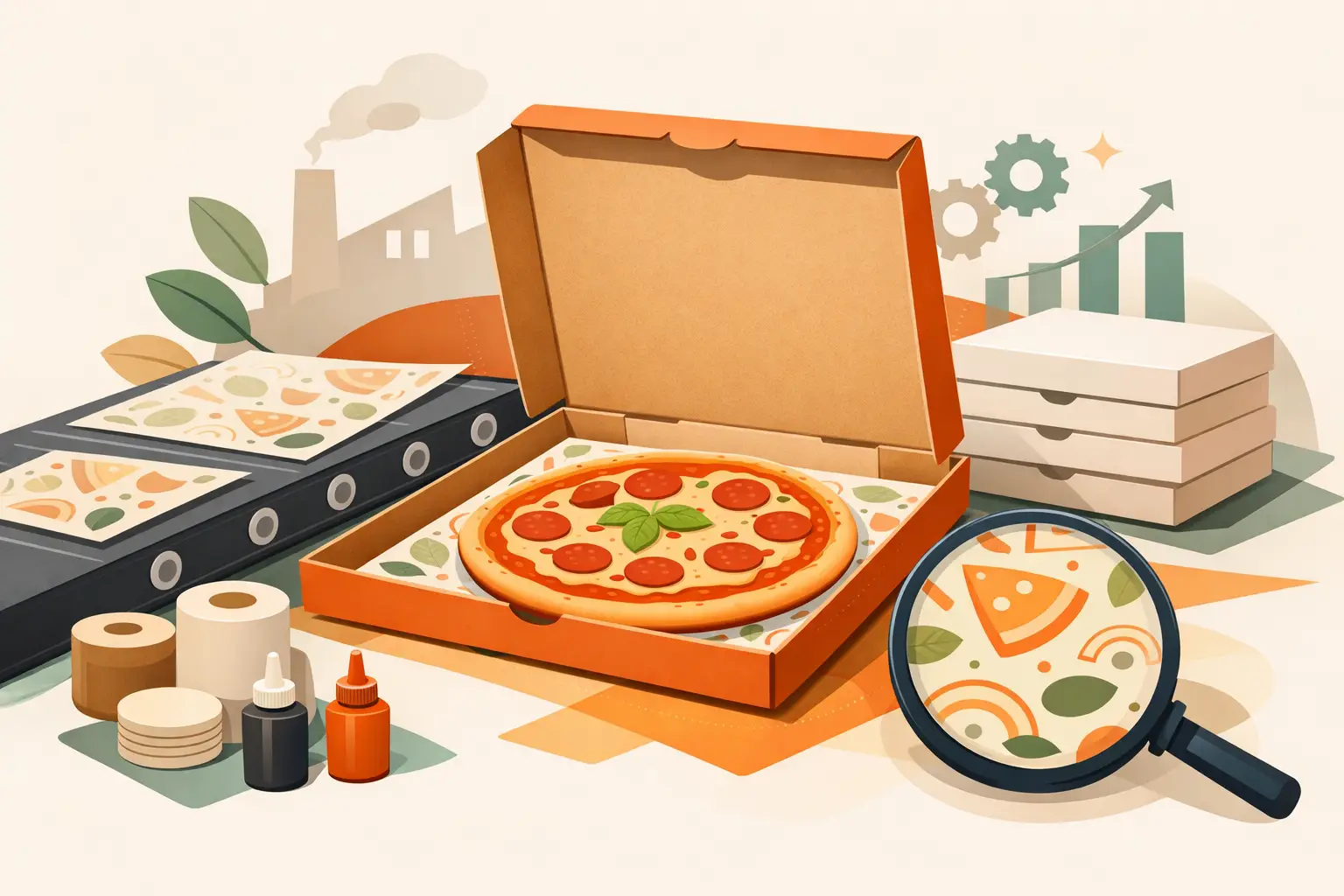
The moment a customer lifts the lid, your packaging starts speaking for your business. Printed pizza box liners do more than sit between the base and the box – they help control grease, sharpen presentation and turn a plain delivery box into branded packaging that feels considered rather than generic.
For pizza shops, takeaways and restaurant groups, that matters. A box liner is a small detail, but it affects how food looks on arrival, how clean the box stays during service and whether your brand is visible once the pizza is opened. If you are investing in product quality, the packaging around it should support that standard rather than dilute it.
Why printed pizza box liners matter
A pizza box does a functional job. It protects the product, holds heat for a period and gives staff a quick, familiar pack format during busy service. The liner adds another layer of control inside that environment.
First, it improves presentation. A fresh printed sheet under a pizza creates a cleaner, more finished look than a bare cardboard base, especially when cheese oils and toppings shift in transit. That visual difference is simple, but customers notice it. In dine-in, takeaway and delivery, neat presentation helps reinforce the impression that your operation is organised.
Second, it supports branding where it counts. Exterior box printing has value, but the inside of the box is where the customer spends time looking. If your logo, pattern or branded design is visible when the lid opens, the packaging becomes part of the eating experience rather than just transport.
Third, it can help with grease management. Depending on the pizza style, topping load and service time, grease can mark the box base quickly. A suitable liner helps absorb or separate oils from the cardboard surface. That does not eliminate grease in every case – deep pan, extra cheese and meat-heavy orders will always behave differently from a thinner margherita – but it can improve box cleanliness and reduce the appearance of mess.
Where liners make the biggest difference
Not every pizza operation uses liners in the same way. Some need them for every order. Others benefit most on premium products, sharing pizzas or house specials where presentation carries more weight.
They are particularly useful for takeaway and delivery businesses. Once the box leaves the counter, you lose control of handling conditions. The liner gives you a better chance of keeping the inside of the box looking tidy when it reaches the customer.
They also make sense for operators with a strong visual brand. If your business invests in signage, menus and social content, plain inner packaging can feel like a missed opportunity. A printed liner helps carry that brand consistency into the final handover.
For hospitality groups with several sites, printed liners can also support standardisation. When every branch uses the same branded packaging format, the customer experience feels more consistent across locations.
Choosing the right printed pizza box liners
The right liner is not just about putting a logo on paper. It needs to suit the realities of hot food service, the size of your boxes and the pace of your operation.
Material is the starting point. You need a food-safe sheet designed for direct contact with food and capable of handling greasy conditions. In practice, operators are usually balancing appearance, grease resistance and environmental considerations. If sustainability is part of your packaging policy, biodegradable, compostable and recyclable options are often the priority, but they still need to perform well in service.
Size matters more than many buyers expect. A liner that is too small can look token and shift around in the box. One that is too large can bunch at the edges, interfere with loading or pick up excess moisture. Standard sizes work for many pizza formats, but bespoke sizes are often worth considering if your boxes are non-standard or if you want a more precise fit.
Print design needs practical thinking. A repeated logo pattern usually works better than a complex, highly detailed artwork file, particularly on greaseproof sheets where clarity and consistency matter more than fine visual effects. Strong contrast helps. Overcrowded designs rarely add value during service.
Print, proofing and ordering without delays
For busy food businesses, the buying process matters almost as much as the product itself. Packaging is often ordered around trading pressures, menu launches or site openings. Long lead times and vague approval stages create avoidable problems.
That is why proofing support is useful. Before production starts, a clear mockup allows you to check scale, spacing and overall fit. It helps avoid common issues such as logos printing too small, artwork sitting awkwardly on the sheet or a design that looks good on screen but weak in production.
Sample requests can also be worthwhile, especially if you are switching supplier, trialling a new size or checking how the paper performs with your menu. Testing in a live kitchen gives you a far better sense of suitability than relying on specification alone.
For many operators, speed is non-negotiable. A clearly defined production window is easier to manage than open-ended timelines. If you are ordering custom packaging regularly, dependable turnaround and straightforward artwork approval reduce admin and help with stock planning.
What to avoid when buying printed pizza box liners
The most common mistake is treating liners as a purely decorative extra. If the paper does not suit hot, greasy food, or if the size is wrong for your boxes, even the best-looking print will feel impractical in service.
Another issue is ordering generic dimensions without checking the exact internal box size. Pizza boxes sold as the same nominal size can still vary in construction. A quick measurement check before ordering usually prevents fitting problems later.
There is also the question of volume. Buying too cautiously can leave you reordering too often and paying for avoidable interruptions. Buying too aggressively without testing first can create waste if the specification needs changing. The sensible approach is usually to confirm fit, print and performance early, then scale repeat orders once you know the product works.
Design can be overdone too. A pizza liner should strengthen the brand, not compete with the food. Clean, repeatable branding tends to age better and work harder across everyday service.
Sustainability and commercial reality
Most food businesses are under pressure to improve packaging choices, but procurement still comes down to operational practicality. A liner has to meet environmental expectations without slowing service or undermining food presentation.
That is why material choice should be discussed alongside use case. If your pizzas are high oil, high heat and long-distance delivery products, performance is critical. If your service is more dine-in focused with shorter pack times, your priorities may shift slightly towards visual presentation and eco credentials. It depends on how the packaging is being used, not just how it looks in a catalogue.
UK manufacturing can also be relevant here. For operators who need shorter lead times, easier communication and better supply reliability, sourcing from a UK specialist often makes purchasing simpler. It can also help when you need bespoke sizing, proof amendments or repeat runs without unnecessary delays.
When custom liners justify the spend
Not every packaging upgrade produces a visible return, but printed pizza box liners are one of the simpler additions to assess. If they make the pizza look better, keep the box cleaner and reinforce the brand every time the lid is opened, they are contributing to perceived value.
That is especially relevant for premium menus, signature pizzas and branded takeaway concepts. Customers may not comment directly on the liner, but they register the overall finish. Clean presentation influences how the product is judged, particularly in delivery where packaging and food arrive as one combined experience.
For operators competing in crowded local markets, these details can separate a business that looks established from one that still feels generic. The spend is usually easier to justify when it supports both brand recognition and day-to-day function.
A practical fit for growing pizza businesses
As order volumes increase, small packaging decisions become operational ones. Staff need products that are easy to store, simple to use and consistent across every shift. The best printed pizza box liners do not create extra steps or confusion. They fit the box properly, perform as expected and arrive on a repeatable timeline.
That is where specialist suppliers tend to stand apart. A business such as Greaseproof Packaging focuses on the practical side of branded food wraps – artwork upload, mockups, proof approval, flexible sizing and clear delivery expectations – because those are the details commercial buyers actually need to get right.
If you are reviewing your pizza packaging, start with the customer moment that matters most: the box opening. A well-made liner will not fix poor food, but it will help good food arrive looking like it should.
Continue reading
- © 2026 Greaseproof Packaging
- Registered: SC759437
- VAT Reg No: 444972955
- © 2026 Greaseproof Packaging
- Registered: SC759437
- VAT Reg No: 444972955